Built for People
Most processes fail for a simple reason: they weren't designed for the people expected to use them. Learn how empathy, simplicity and right-sized governance create processes that teams actually follow.
I've never met a team that wanted more process.
What people want is clarity. They want to know what information is needed to get started, who needs to approve the work, how priorities are determined and what success looks like. Process is simply one of the tools organizations use to create that clarity.
The problem is that many organizations focus on the process itself instead of the people expected to use it.
At some point, every growing organization reaches a moment when the informal ways of working that once felt efficient start to break down. Information gets lost, decisions take longer and teams become frustrated because everyone seems to be operating with a different understanding of how work should get done. The natural response is to introduce more structure through workflows, approval paths, governance models and documentation.
That response isn't wrong. In fact, documented processes are one of the most important tools organizations have for creating consistency and scaling effectively. The challenge is that many processes are designed as if the organization exists to support the process rather than the other way around.
The Problem With Best Practices
One of the most common mistakes organizations make is assuming there is a universal best practice.
Leaders see a process that works well in another company and attempt to replicate it without considering the environment in which it was created. A startup adopts enterprise governance. A large enterprise tries to mimic startup agility. Both wonder why the results fail to meet expectations.
A 10-person company does not need the same level of governance as a 1,000-person organization. Likewise, a global enterprise operating across multiple business units cannot function on hallway conversations and institutional knowledge alone. The needs are different, which means the operating model should be different.
The goal is not to find the perfect process. The goal is to find the right amount of process for the complexity of the work and the maturity of the organization. Too little structure creates confusion. Too much structure creates friction. The challenge is finding the balance between the two.
When Process Becomes the Problem
Organizations often respond to challenges by adding more process. Another approval step. Another review cycle. Another meeting. Another form.
Each addition seems reasonable in isolation, but over time complexity accumulates. Teams spend more time navigating the process than doing the work the process was intended to support.
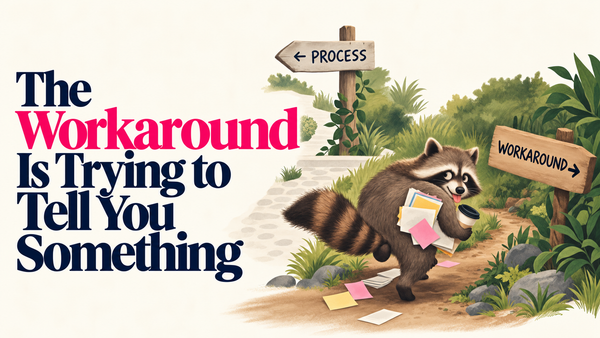
When that happens, people begin creating workarounds. Conversations move into side channels. Spreadsheets appear outside approved systems. Decisions happen before meetings instead of during them. Leaders often interpret these behaviors as resistance to change when they are frequently signs that the process has become more difficult than the work itself.
This is especially common in creative and marketing organizations. We are creating campaigns, websites, content and customer experiences. We're not manufacturing life-saving pharmaceuticals. The level of governance should match the level of risk. Every step in a process should have a clear purpose and contribute value to the outcome.
Empathy Is a Business Skill
The most successful operating models I've seen share something in common. They are designed with the people doing the work, not simply for them.
Designers understand where creative reviews break down. Marketers understand where information gets lost. Project managers understand where timelines become unrealistic. Writers understand where ambiguity creates unnecessary revisions. The people closest to the work often have the clearest understanding of the friction points that need to be addressed.
This is where empathy becomes a practical business skill rather than a leadership buzzword.
Empathy is not about avoiding accountability or lowering standards. It is about understanding how people experience the systems we create. It means listening before designing, testing assumptions before implementing solutions and recognizing that adoption is earned, not mandated.
I've found that people are far more likely to embrace a process when they understand its purpose, see its value and feel that their input helped shape it. People support what they help create.
Documentation Is Organizational Empathy
Documentation often gets a bad reputation because people associate it with bureaucracy. In reality, documentation is one of the most important tools organizations have for scaling effectively.
Without documentation, knowledge becomes trapped in individual people. Processes depend on memory instead of consistency. New employees take longer to onboard. Vacations become operational risks. Teams become dependent on a handful of individuals who know how everything works.
Good documentation creates clarity. It helps people find answers without relying on someone else's availability. It reduces uncertainty and allows organizations to scale without becoming dependent on tribal knowledge. That's not bureaucracy. That's organizational resilience.
Freedom Within a Framework
Good operations should create clarity around expectations, responsibilities and decision-making. It should provide enough structure to guide the work without becoming the work itself. Once those guardrails are in place, teams should have the flexibility to apply judgment, creativity and expertise.
The best processes aren't the ones with the most approvals, the most documentation or the most sophisticated workflows. They're the ones people trust because they consistently help them accomplish their goals.
At its best, process becomes almost invisible. People know where to start, what is expected and how work moves forward. They spend less time navigating systems and more time creating value.
When people feel supported and protected by a process, they follow it.
When they feel constrained by it, they'll find a way around it.
The best processes aren't built for control.
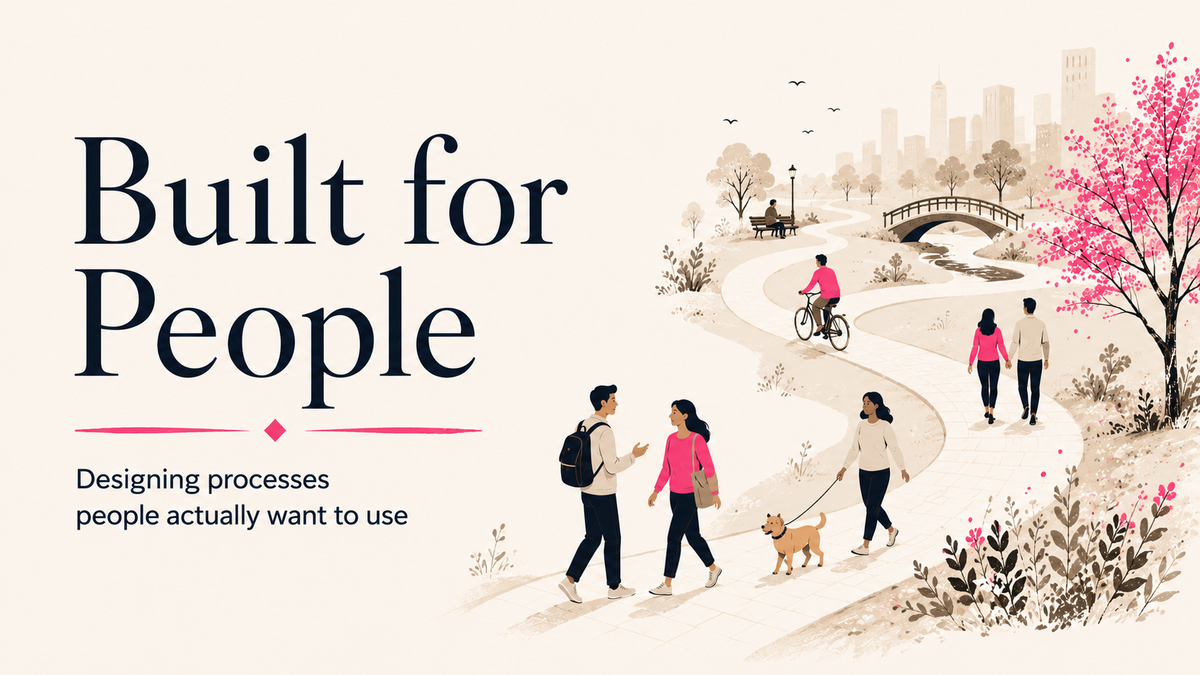
They're built for people.