Welcome to the Creative Work Zoo
Meet the Creative Work Zoo: familiar workplace behaviors that reveal something deeper about creative systems, feedback, prioritization, scope and collaboration.
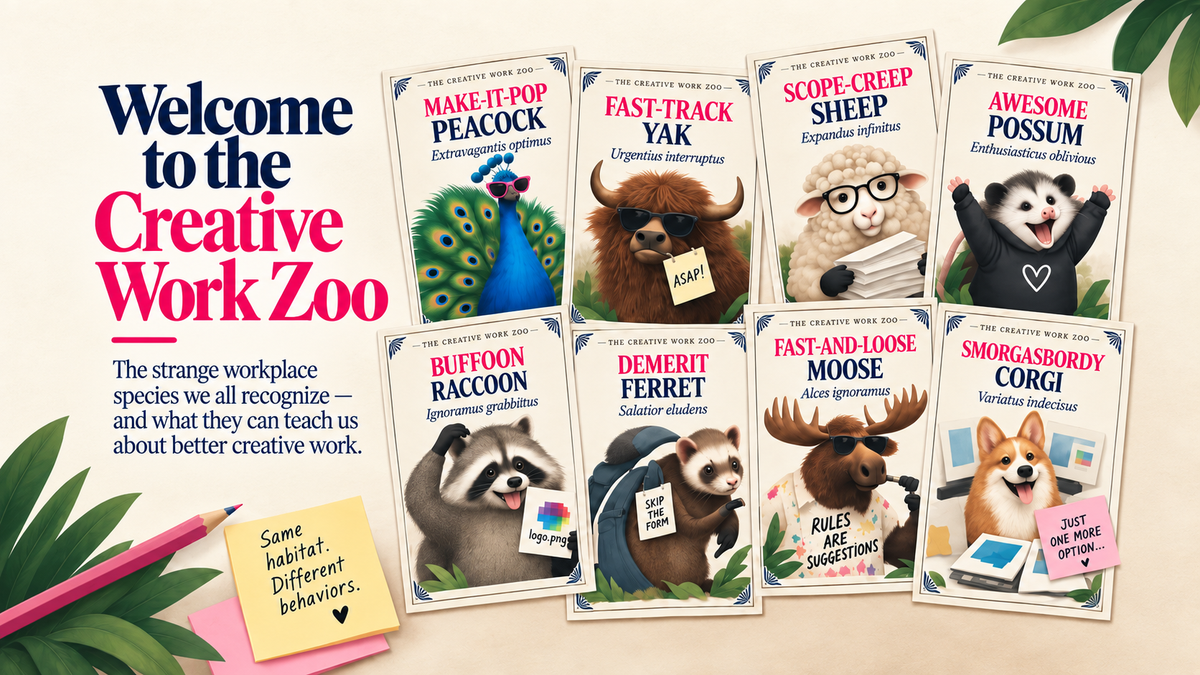
The strange workplace species we all recognize — and what they can teach us about the systems around creative work
Spend enough time working with creative teams and you begin to recognize certain species in their natural habitat.
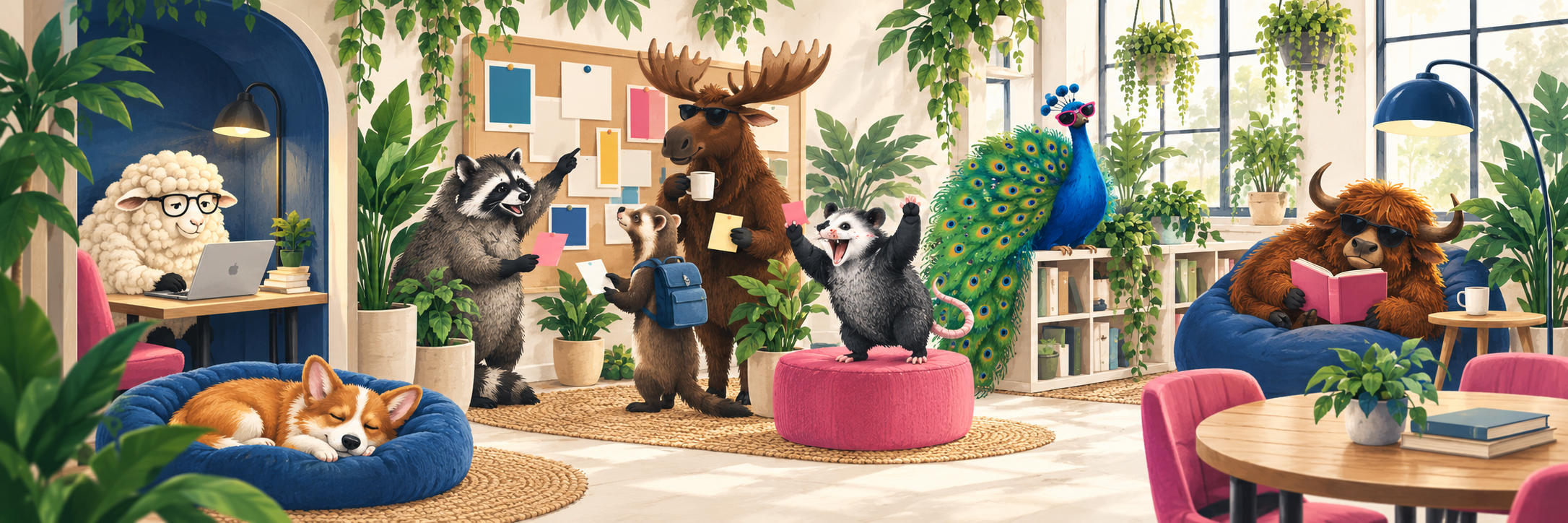
There’s the Make-It-Pop Peacock, who may not be able to tell you what isn’t working, but is quite certain it needs to be flashier.
The Fast-Track Yak appears at the front of the queue with something that will “only take five minutes.”
The Scope-Creep Sheep starts with one perfectly reasonable request and, before you know it, has wandered into three new deliverables, two additional audiences and a landing page.
And somewhere nearby, the Awesome Possum is enthusiastically giving everything a thumbs-up despite having absolutely no idea what’s happening.
Welcome to the Creative Work Zoo.
I started creating these animals mostly because they made me laugh. Once I started, I couldn’t stop seeing them. The Buffoon Raccoon. The Swirly Squirrel. The Bureaucrat Bat. The Smorgasbord-y Corgi. We are now up to 18 species, and I’m fairly certain the zoo isn’t full yet. (Check out the first "flock" on Instagram.)
But underneath the joke is something I think about a lot in Creative Operations. We tend to describe workplace dysfunction as a people problem. Sometimes it is. But a surprising amount of what looks like bad behavior is actually behavior that the system allows — and sometimes inadvertently encourages.
Don’t blame the peacock
Take the Make-It-Pop Peacock. “Can we make it pop?” is objectively terrible creative feedback. But it’s also worth asking why someone is giving feedback that way.
Do they understand what kind of feedback would actually be useful? Was the strategy clear enough that they can evaluate the work against something other than personal preference? Do they know what decision they’re being asked to make? Did anyone explain their role in the review?
If the answer to all of those questions is no, perhaps we shouldn’t be entirely surprised when someone falls back on “I don’t know. Can we make it flashier?”
Better creative feedback doesn’t come only from finding people who are naturally good at giving feedback. It comes from creating a system that helps people give better feedback.
Every animal leaves clues
Once you start looking at the zoo this way, the animals become surprisingly useful.
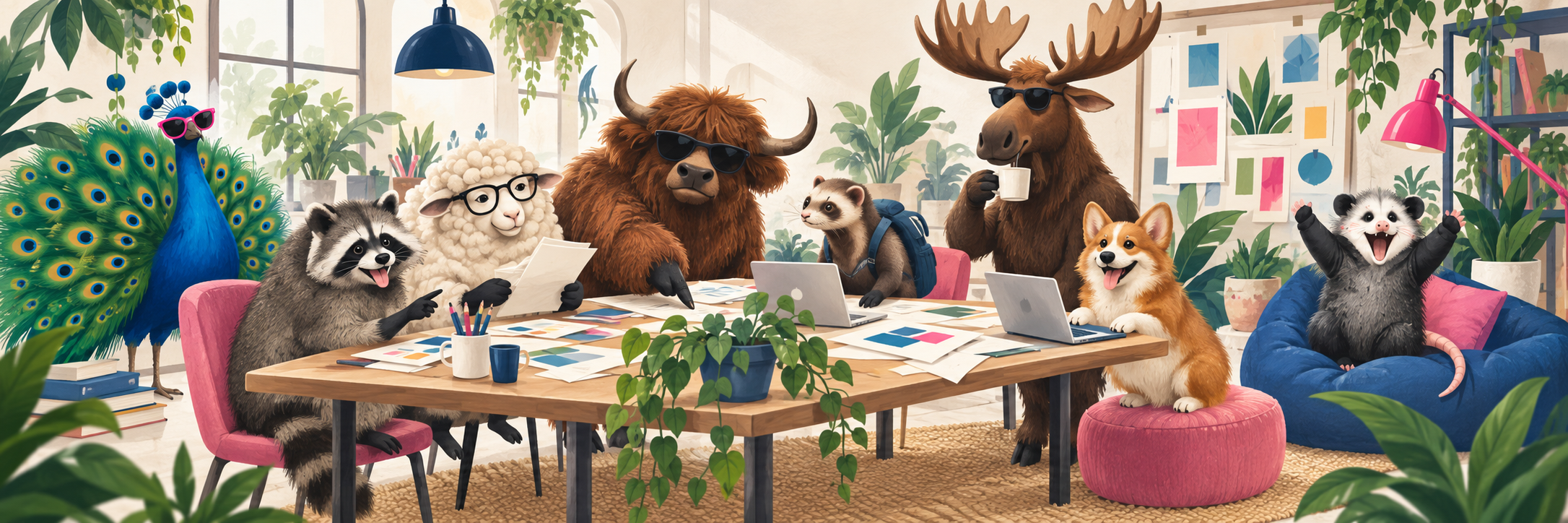
The Fast-Track Yak might be telling you something about prioritization. If everyone can declare their request urgent and jump the queue, you don’t really have a prioritization system. You have a line people can cut.
The Scope-Creep Sheep might be telling you something about briefs and scope. Did everyone agree on what we were making and why before the work started? Is there a moment when new requests become new scope rather than casually attaching themselves to the existing project?
The Demerit Ferret, who sneaks directly into someone’s Slack DMs rather than using the intake process, might be telling you that your intake process is too cumbersome — or that nobody understands why it exists.
The Swirly Squirrel, scattering feedback across Slack, email, meetings, documents and whatever other surface happens to be nearby, may be exposing the absence of a clear feedback system.
The Smorgasbord-y Corgi, happily sampling Drafts 1 through 12 before ultimately deciding Draft 1 was pretty good, might be telling you that nobody established the criteria for making a creative decision.
And the Fast-and-Loose Moose, trampling through the brand guidelines, could be telling you that your brand governance depends too heavily on people knowing where a 72-page PDF lives.
The behavior can be maddening. But it’s also data.
Before correcting the behavior, look at the habitat
This is one of the things I find most interesting about Creative Operations.
We’re often called in when something isn’t working smoothly. The natural instinct is to address the individual incident.
Someone bypassed intake. Remind them to use the form. Someone gave confusing feedback. Ask them to consolidate it. Someone added scope. Tell them we can’t accommodate it.
And sometimes that’s exactly what needs to happen. But when the same thing happens repeatedly, the question changes.
Instead of:
Why does this person keep doing this?
Try:
What about the way we work makes this behavior easy?
That’s a much more useful Creative Ops question. Maybe the intake form asks for information people don’t have yet. Maybe priorities aren’t actually clear. Maybe nobody knows who has decision rights. Maybe the brief captures the deliverable but not the problem.
Maybe there isn’t one obvious place to leave feedback. Maybe the brand guidance is technically available but practically unusable.
Those aren’t character flaws. They’re design opportunities.
We’re all in the zoo
There’s another reason I don’t want the Creative Work Zoo to become a taxonomy of other people’s annoying behavior.
We’re all one of these animals sometimes.
I’ve absolutely been the person who remembers an important piece of context halfway through something. I’ve asked for another option. I’ve probably scattered information across more places than I would care to audit.
Put someone under enough time pressure and today’s beautifully process-compliant colleague can become tomorrow’s Fast-Track Yak.
That’s why the point isn’t to eliminate the animals.
And it definitely isn’t to create increasingly elaborate processes designed to prevent every irritating thing a human being might possibly do. That’s how you end up creating an entirely new species: the Bureaucrat Bat.
The goal is to design a habitat where the better behavior is also the easier behavior.
Make the right place to submit work obvious. Make priorities visible. Make feedback easier to consolidate than scatter. Give people enough strategic context to exercise judgment. Clarify who is making which decisions.
And when the same animal keeps appearing, get curious about why.
The zoo is a diagnostic tool
Creative Operations is often described in terms of workflows, tools, resources and project management. Those things matter, but the more interesting part of the job is designing the environment around creative work.
Systems shape behavior. And behavior tells us something about systems.
So the next time a Fast-Track Yak charges into your queue or a Scope-Creep Sheep wanders into your project, you can certainly roll your eyes. I probably will too.
Then look at the habitat. Because the animal may be annoying. But it might also be trying to tell you something.
And if you’ve spotted a species I haven’t documented yet, I am accepting field reports. The Creative Work Zoo currently has 18 residents, but I have a feeling we’re going to need a bigger enclosure.
What species have you spotted in the wild?
Categories: Creative Ops, Leadership, Teams
If you’d rather get Make Creative Work in your inbox, you can subscribe here: https://www.makecreativework.com/#/portal/signup