How Creative Ops Pushes Back Without Breaking Trust
Creative Ops pushback isn’t about saying no. It’s about making constraints visible and tradeoffs clear. When grounded in facts and applied consistently, it builds trust, protects teams from unrealistic demands and reinforces credible delivery.
Saying no is rarely the hard part. The hard part is protecting the relationship while still protecting the team and the work.
In Creative Operations, pushback usually shows up around timing, scope or resourcing. The mistake is treating these moments as personal or emotional – they are simply operational. The job is to make the constraints visible and the tradeoffs explicit.
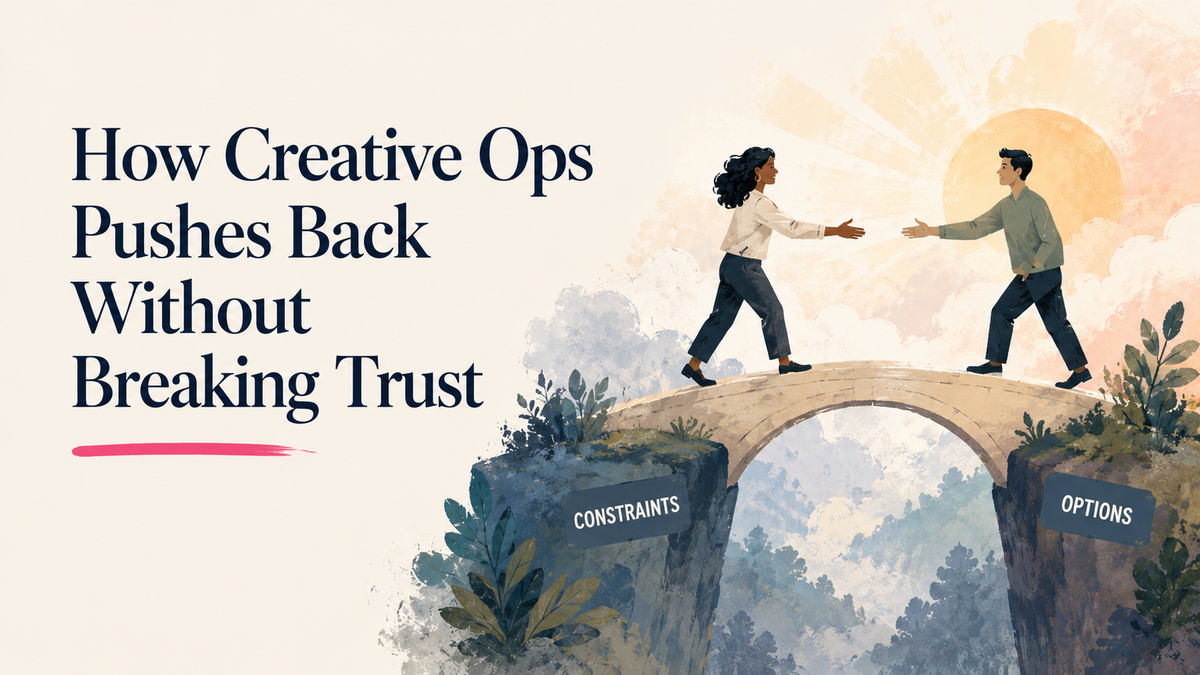
When I have to push back, I anchor the conversation in facts. I explain what is already committed, what capacity looks like and what will be impacted if we force something in. I focus on options rather than refusals. For example, we can meet the date with reduced scope, we can keep the scope and move the date or we can add resources and funding. What we cannot do is pretend all three are possible at once.
Pushback also requires consistency. If exceptions become routine, the system stops working and teams stop trusting it. That means being willing to hold the line even when it is uncomfortable and even when the request is coming from above.
Done well, pushback builds credibility. Stakeholders learn that when Creative Ops agrees to something, it will happen. Teams learn that constraints are real and that someone is protecting them from unrealistic expectations.
And the real truth, if you are a flexible and professional stakeholder, understanding these constraints and not demanding an exception every time – when you really need something pushed to the front of the line, your Creative Ops lead might be in a better mood to negotiate.