Rowing Backwards
What transformation taught me about strategy.
For most of my career, I believed transformation followed a fairly predictable sequence. You started with a vision, translated that vision into a strategy, built a roadmap and then executed the plan.
It was neat. Logical. Comfortable.
If someone had asked me a few years ago whether you should begin executing before every detail of the strategy had been worked out, I probably would have said no. In my mind, execution was the reward for good planning. Once everyone agreed on the destination, you started rowing.
Over the past few years, however, I've led transformations at organizations that couldn't afford to wait for perfect certainty. Looking back, I realize they all taught me the same lesson. We weren't abandoning strategy. We were allowing strategy and execution to evolve together.
I didn't recognize the pattern at first because each experience looked completely different. One involved redesigning a global publishing workflow at Visa. Another centered on developing compostable packaging at Amy's Drive Thru. Today, I'm helping reshape marketing operations and brand systems at AAA. Different industries, different teams and different challenges. Yet each one changed the way I think about transformation.
The first time this happened, I honestly thought my VP had lost his mind.
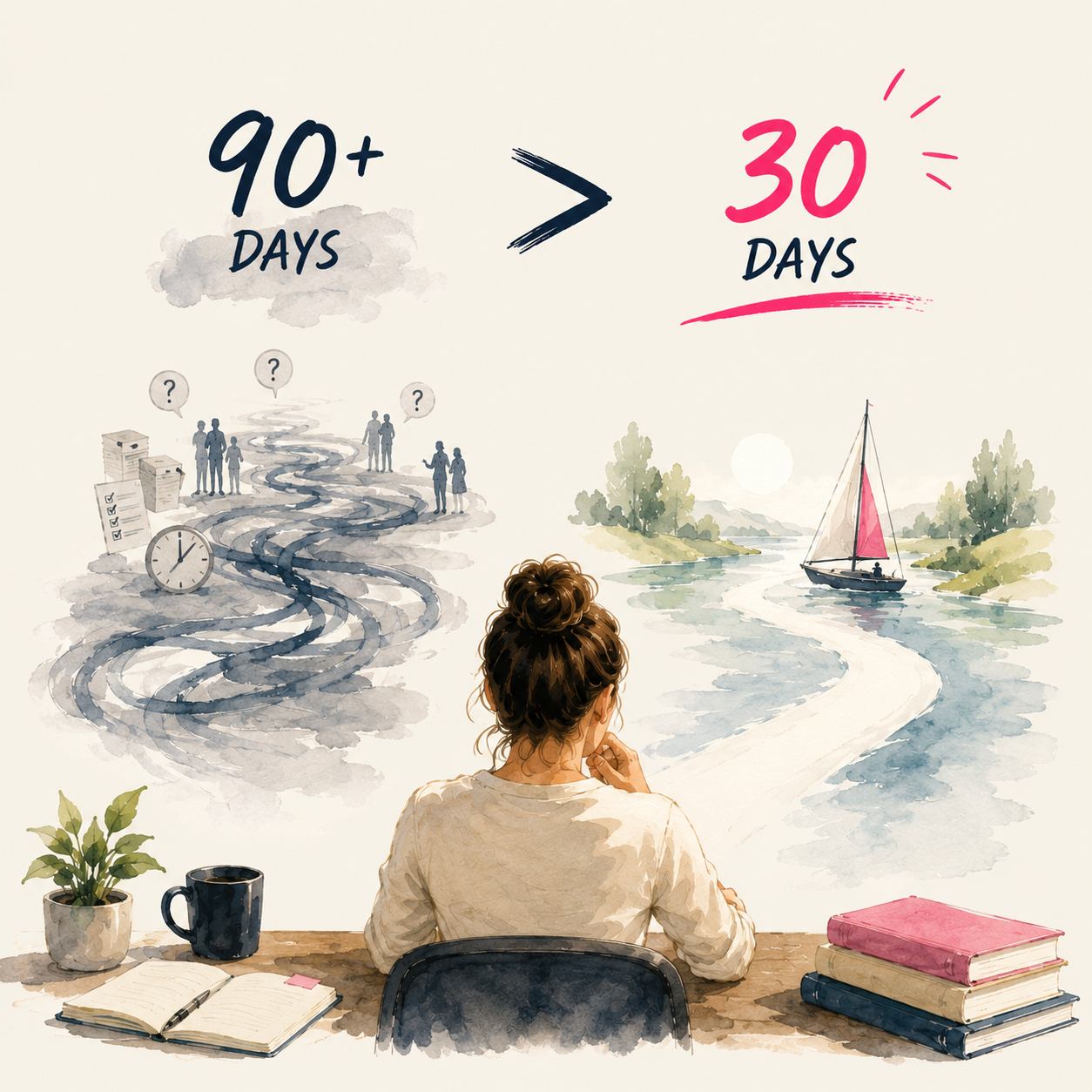
At Visa, I was responsible for Creative Services supporting Visa.com, a global ecosystem involving marketers, agencies, developers, content owners, legal reviewers and regional teams spread across the world. Publishing a page could easily take more than 90 days from kickoff to launch. Everyone agreed the process was too slow, but it had evolved that way for a reason. Every step existed because someone, somewhere, believed it reduced risk.
Then my VP gave us a goal that felt impossible.
Reduce the publishing timeline from 90 days to 30.
My first reaction wasn't inspiration. It was disbelief.
I remember thinking, Does he actually understand how this process works? Creative Services didn't even control most of the people involved. We couldn't simply tell Legal to review faster or ask regional teams to stop asking questions. The math didn't math, as the kids say.
After spending a day convincing myself it couldn't be done, I finally asked a different question.
What would have to change for this to become possible? That question shifted everything.
Instead of trying to squeeze time out of the existing process, we started examining every assumption behind it. We challenged meetings that no longer created value. We introduced templates that eliminated unnecessary work. We brought copy and design together inside Figma instead of managing separate copy and design files. We established faster review expectations and partnered with our global authoring teams to reinvent handoff requirements. Later, we even introduced AI to answer stakeholder questions and automate administrative work that project managers had been doing manually.
None of those ideas appeared on day one. Each improvement revealed the next opportunity.
And, with this new thinking, there were times when we could hit 30 days, and overall we reduced publishing timelines by more than 30% while improving consistency across a massive global ecosystem. More importantly, I realized the strategy hadn't been fully knowable before we started. It emerged because we were willing to question the work while we were doing it.
Several years before that, Amy's Kitchen taught me the same lesson in a completely different way.
Amy's Drive Thru had an ambitious goal: Every piece of packaging should be compostable. It sounded straightforward until we started putting hot food into compostable containers.
Our fry box melted.
So we redesigned it.
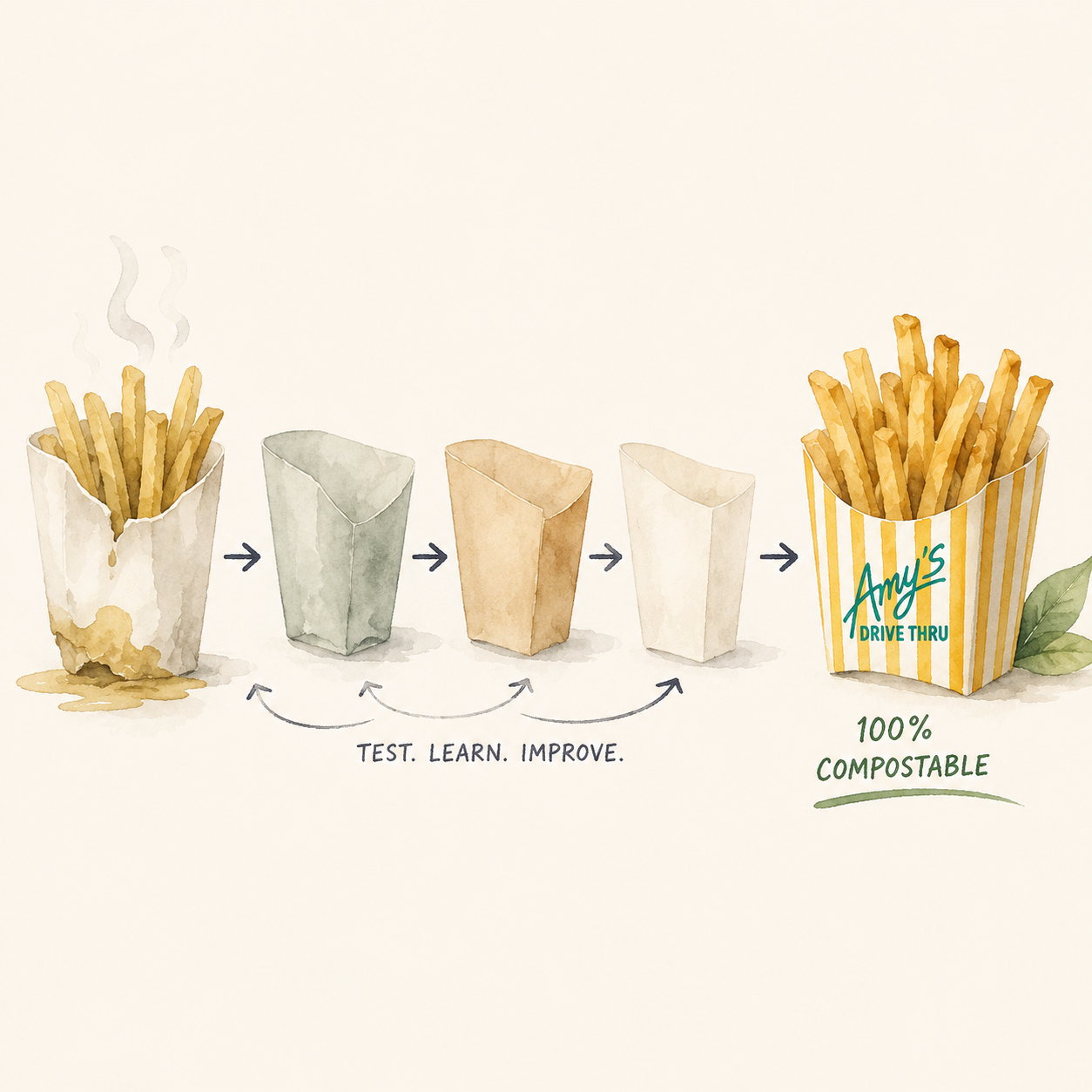
Version after version. One material solved the problem but created manufacturing challenges. My packaging supplier, Jerry, and I went through prototype after prototype, each one teaching us something we hadn't known before.
What strikes me now is that no one ever questioned the vision. 100% compostable remained the destination from the beginning – it was core to our brand and beliefs. What changed was our understanding of how to get there.
If we had insisted on developing the perfect solution before building anything, we would probably still be sitting around a conference table debating materials. Instead, we built, tested, learned and refined until we had a solution that actually worked in the real world.
More recently, I've watched the same pattern unfold during our marketing transformation at AAA.
One of our earliest initiatives was replacing Airtable with Asana. At first, I thought we were just implementing project management software. Instead, Asana became a forcing function for redesigning how marketing worked.
Every configuration decision exposed another organizational question. What kinds of work should flow through Creative Shared Services? When should a project require a creative brief? How should we prioritize competing requests? What does quality actually look like? By the time we had documented our thinking, we'd created more than thirty-five working documents—not because anyone asked us to, but because every answer uncovered another question worth exploring. (And, maybe Holly likes to create documents.)
Even our current work refreshing the brand system is following a similar path.
On deliverable is that we're updating colors and clarifying the color palette. But as we make those decisions, bigger questions naturally emerge. What emotions should Members feel when they interact with AAA? How can color reinforce confidence, belonging or curiosity? How should photography and writing work together to create a more consistent experience?
We don't need to answer all of those questions before improving the color palette.

In fact, trying to do so would probably slow us down unnecessarily.
Instead, we can make thoughtful decisions today that open the door to richer conversations tomorrow. The refined palette isn't the finished strategy. It's one step in discovering it.
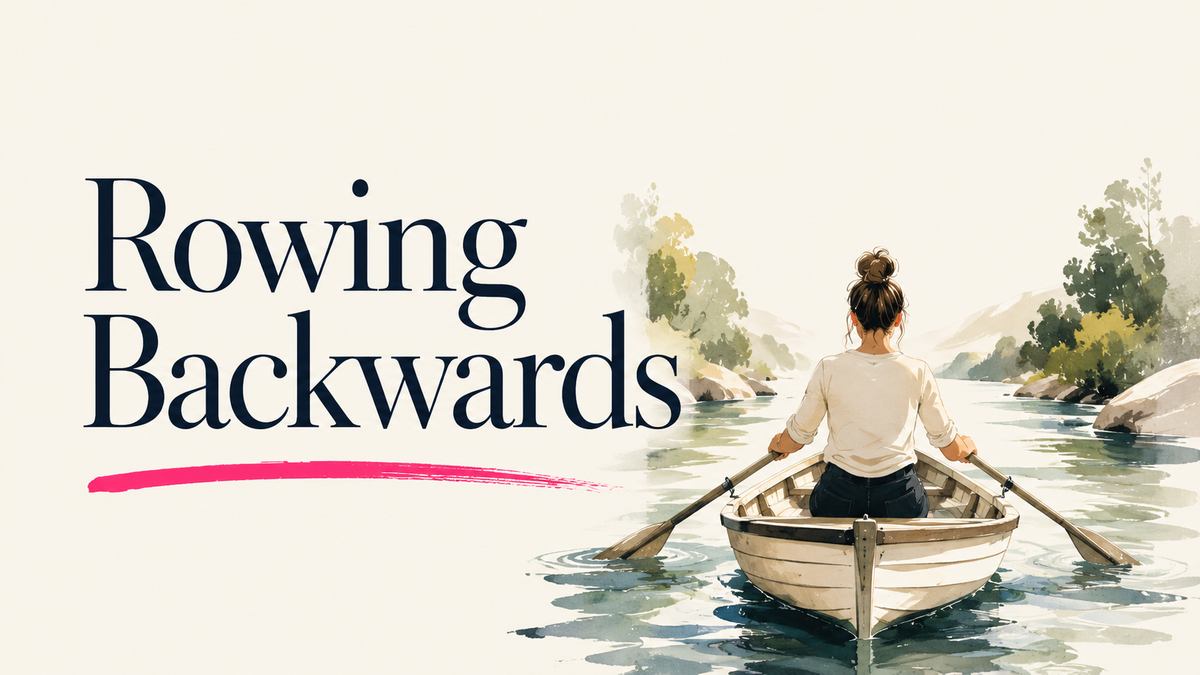
I've started thinking of this as rowing backwards.
Not because we're actually moving backward, but because from the outside it can look as though we're executing before we have a strategy. The reality is much different. We begin with a clear direction, enough conviction to start moving and the humility to accept that doing the work will teach us something we couldn't have predicted.
That's very different from making it up as we go.
It's an intentional choice to shorten the distance between thinking and learning.
I've come to believe that one of the biggest mistakes we make is assuming strategy and execution happen in separate phases. In practice, the strongest strategies I've been part of didn't emerge from predicting every answer upfront. They emerged from building something thoughtfully, observing how it performed and being willing to revise our thinking without abandoning the destination.
Perhaps that's what transformation really is. Not the execution of a perfect plan, but the discipline to keep learning your way toward a better one.