Transformation Is a Road Trip, Not a Destination
Transformation isn't a destination—it's a road trip. Learn a simple five-step framework for leading continuous improvement, adapting to change and building an organization that can evolve as technology, markets and customer expectations shift.
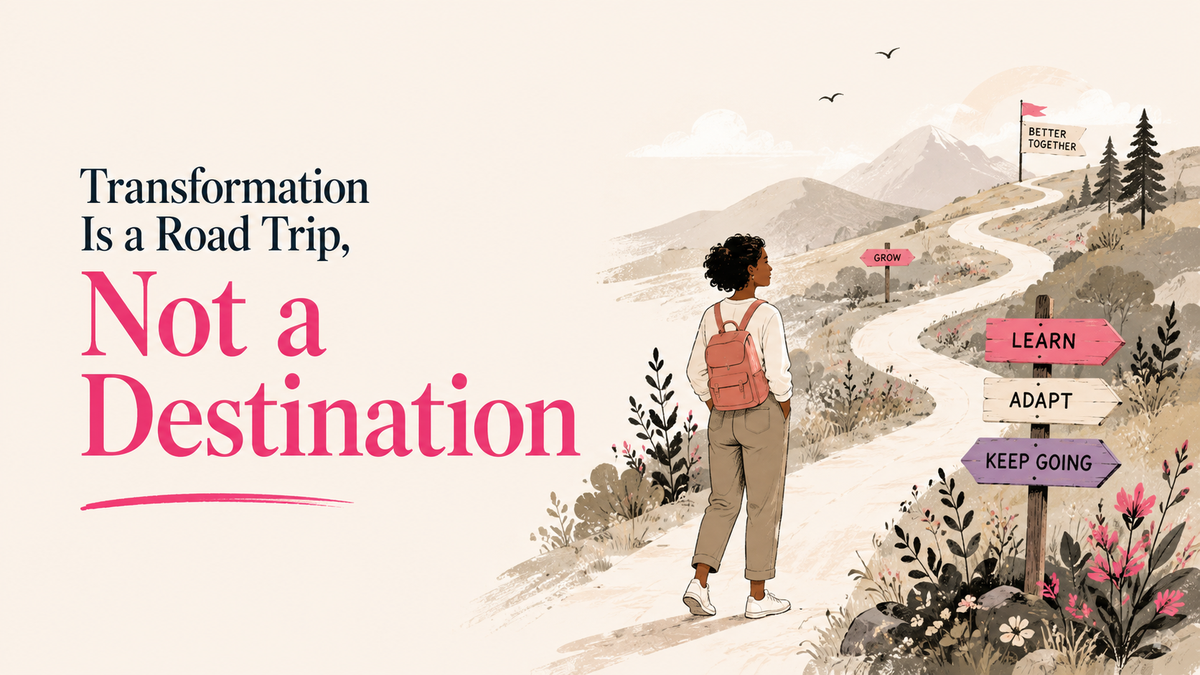
Transformation is a lot like a road trip. The best journeys start with a destination in mind, a map to help guide the way and an understanding of what success looks like when you arrive.
Yet, many transformation efforts begin by simply getting in the car and driving. Teams launch new initiatives, implement new tools, reorganize departments or introduce new processes without first agreeing on where they are headed or how they will know they've succeeded.
The reality is that transformation isn't a destination at all. It's an ongoing practice of adapting, learning and improving. As customer expectations, technology and business priorities continue to evolve, organizations must evolve with them.
The organizations that thrive aren't the ones that transform once. They're the ones that build the capability to continuously improve.
I've noticed that successful transformations follow a pattern, or five key stages:
1) Reflection: Understand Where You Are
Before deciding where to go next, it's important to understand your current location.
Reflection is about taking an honest look at how work happens today. What's working well? What's creating friction? Where are teams spending unnecessary effort? What feedback are you hearing consistently from employees, customers or stakeholders?
The goal isn't to identify what's broken. The goal is to create a shared understanding of reality. Without reflection, organizations risk solving the wrong problem.
2) Ideation & Exploration: Consider the Routes Available
Once you've identified an opportunity for improvement, resist the urge to immediately jump into execution.
• Explore possibilities
• Talk with stakeholders
• Research
• Generate multiple solutions
• Discuss tradeoffs
The first idea is not always the best idea, and the most obvious route is not always the fastest path forward. Exploration creates options, and options create better decisions.
3) Plan & Do: Turn Ideas Into Action
Ideas only create value when they are implemented. This is the stage where organizations define goals, align stakeholders, establish priorities and begin executing the work.
A strong plan doesn't need to predict every turn along the journey. It simply needs to provide enough direction for teams to move forward with confidence.
This is also where leadership plays a critical role. Leaders help define the destination, establish priorities and create alignment around the desired outcomes.
The actual work of transformation, however, is often accomplished by collaborative teams who bring the vision to life through process improvements, experimentation and day-to-day execution.
The best transformations are rarely imposed by leadership. They are enabled by collaborative teams.
4) Document & Train: Help Others Navigate the Route
One of the most common reasons change efforts stall is that knowledge remains trapped within a small group of people.
Successful organizations document what changed, why it changed and how the new process works.
• They create playbooks.
• They share best practices.
• They train teams.
• They answer questions.
* Make adoption easy for others.
A process that exists only in a few people's heads is difficult to scale and nearly impossible to sustain. Documentation and training transform individual knowledge into organizational capability.
5) Feedback & Improve: Keep Updating the Map
No transformation is ever truly finished.
Once a change has been implemented, the next step is to gather feedback, review results and identify opportunities for improvement.
• What worked as expected?
• What surprised you?
• What should be adjusted?
• What new opportunities have emerged?
This stage is where organizations build the habit of continuous improvement. The lessons learned from one initiative become the foundation for the next.
Over time, this cycle becomes less about managing individual projects and more about building an organization that can adapt to change with confidence.
Arriving at Your Destination
The destination matters because it provides direction. The process matters because it creates progress.
The irony of transformation is that by the time you arrive, the destination may have changed. New opportunities emerge. New technologies appear. Customer expectations evolve. That's not failure. That's the nature of transformation.
The organizations that thrive are not the ones that perfectly follow the original map. They are the ones that develop the ability to navigate whatever road comes next. They reflect. They explore. They plan and act. They document and teach. They learn and improve. Then they do it all over again.
Because transformation isn't a destination. It's the practice of continuously becoming better.