Trend #1: AI Becomes a Creative Teammate, Not a Tool
In 2026, AI stops being treated like a fun tool for exploration and becomes a collaborator in the creative process. It works alongside designers, writers and strategists, accelerating conceptual work and removing friction that slows teams down.
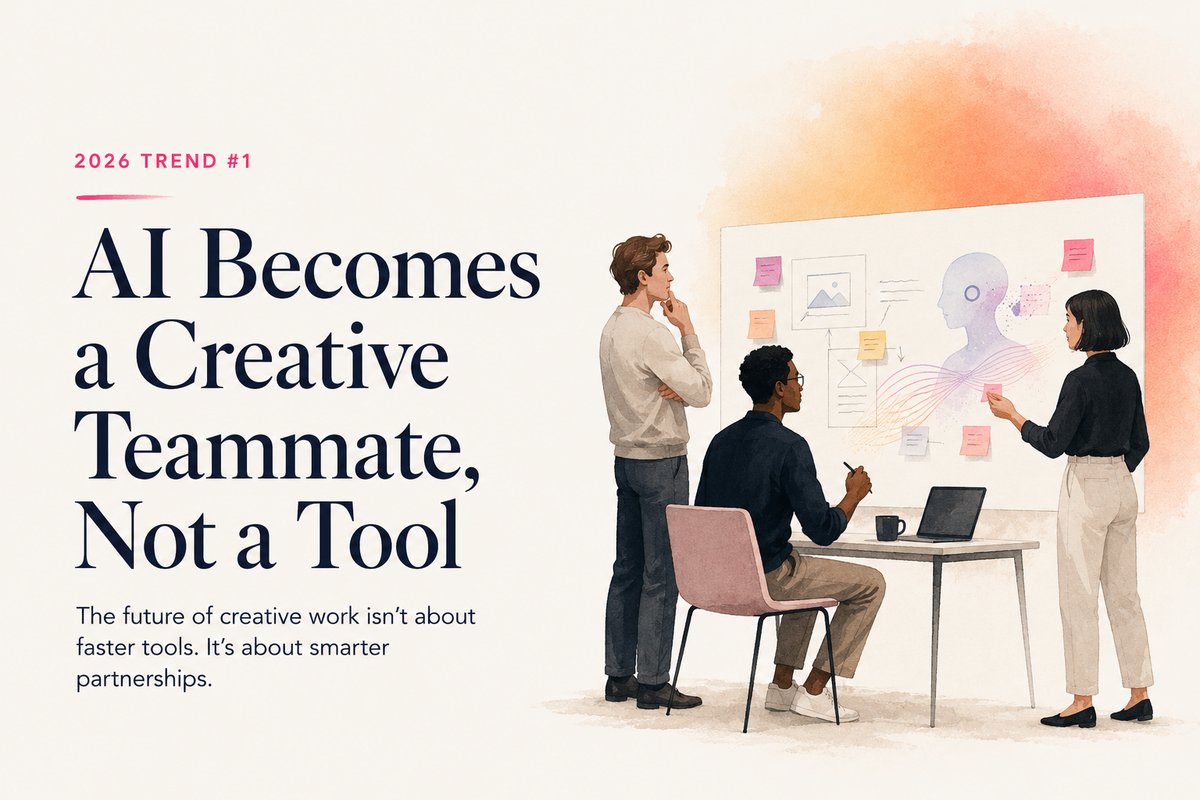
In 2026, AI stops being treated like a fun tool for exploration and becomes a collaborator in the creative process. It works alongside designers, writers and strategists, accelerating conceptual work and removing friction that slows teams down.
AI strengthens the briefing process before work even starts:
- Flags unclear goals or missing details in briefs (I love my Gem to pre-read briefs)
- Highlights inconsistencies between the ask, channel and brand strategy
- Suggests clarifying questions stakeholders may not consider
- Ensures teams begin with complete, aligned inputs
AI becomes a fast, fearless brainstorming partner:
- Generates multiple creative directions from a single prompt
- Produces variations on layouts, copy, imagery or campaign ideas
- Lets teams explore concepts without burning hours
- Shortens early creative cycles by giving teams more to react to
AI generates first-round drafts for designers and writers:
- Produces base copy, wireframes, design elements or moodboards
- Creates quick drafts that spark discussion
- Helps teams bypass the slowest part of the creative process: starting
- Gives creatives a springboard instead of a void
Creative Ops becomes the architect of how AI is used responsibly:
- Establishes prompt libraries, quality standards and usage guidelines
- Builds review gates for AI-involved assets
- Ensures outputs meet brand, accessibility and legal requirements
- Trains teams on prompt writing and evaluation
- Monitors AI patterns and adjusts systems over time
Why it Matters
AI doesn’t replace creative thinking: it clears the space for it. It sharpens briefs, speeds up early ideation and removes the anxiety of starting from a blank page. It turns hours of foundational work into minutes, giving teams more time for originality, strategy and breakthrough thinking. For creatives, this means finding the idea faster and exploring it further. And when Creative Ops owns governance, quality standards and review gates, AI becomes reliable, consistent and brand-safe: not chaotic or risky. AI becomes the teammate that improves speed, strengthens alignment and elevates the entire creative process.
How to Evolve
- Evangelize the pros and cons of AI in your organization; reduce fear and surprise
- Build shared prompt libraries for writers, designers and marketers
- Integrate AI review steps into existing workflows instead of adding them later
- Train teams on prompt structure to reduce junk output
- Set quality bars for AI output, document them and train teams on what’s “good enough”
- Pilot AI on low-risk work first, then expand to concepting and early drafts
- Create a feedback loop so the system improves as teams use it
- Track where AI saves time and where it creates churn, then adjust your rules
Originally published at https://www.linkedin.com.