Trend #11: Feedback Becomes Structured, Not Subjective
Feedback stops being personal preference (“I don’t like it”) and becomes a structured, criteria-based system that improves creative quality instead of derailing it. Creative Ops leads the shift by replacing ad-hoc commentary with shared standards, required criteria and guided review frameworks.
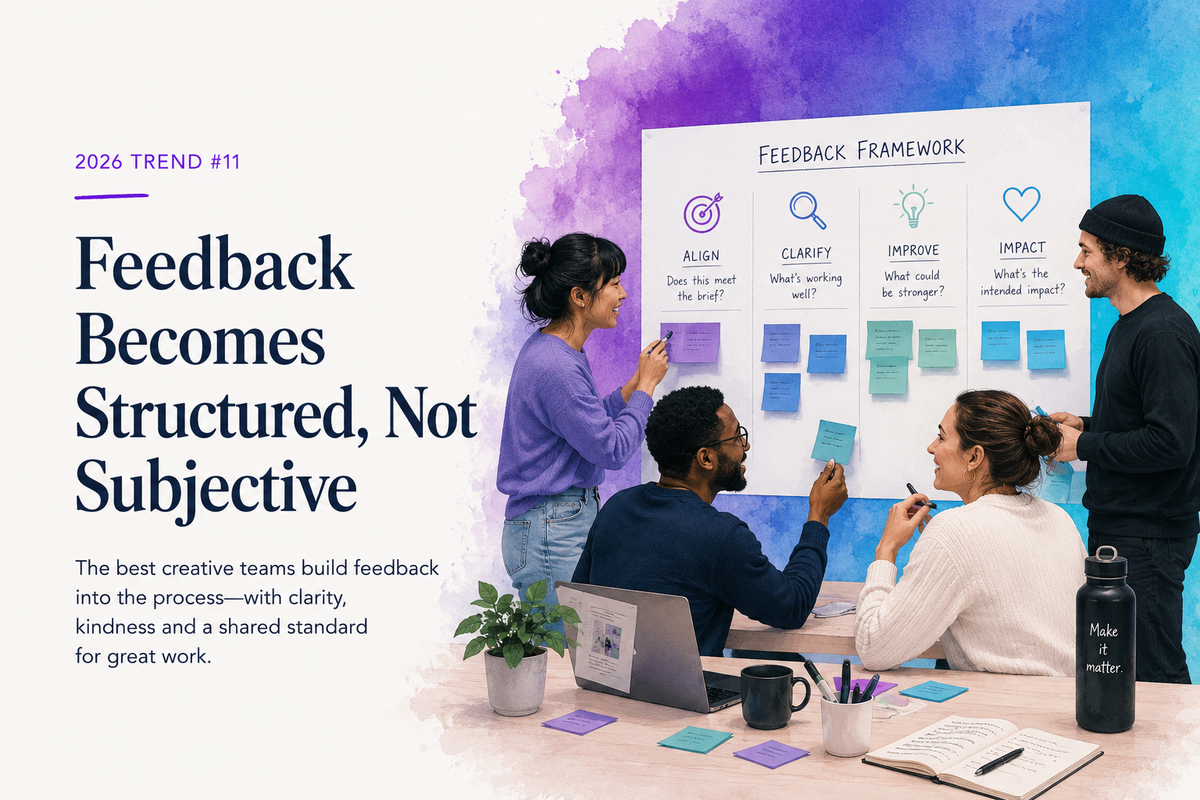
In 2026, feedback stops being personal preference (“I don’t like it”) and becomes a structured, criteria-based system that improves creative quality instead of derailing it. Creative Ops leads the shift by replacing ad-hoc commentary with shared standards, required criteria and guided review frameworks. The result: less churn, fewer emotional debates and tighter alignment across marketing, brand, product and legal.
Feedback shifts from preference to criteria
- Stakeholders respond using approved criteria: clarity, accuracy, compliance, brand fit, audience relevance
- Comments tied to specific goals in the brief
- Mandatory fields guide reviewers to evaluate against the strategy, not taste
- Multi-reviewer comments consolidated to avoid contradictions
Review frameworks guide better input
- Templates for brand, copy, UX, design and campaign feedback
- Examples of “good feedback” vs “unhelpful feedback”
- Prompts that ask: What goal is this comment supporting?
- Reviewers trained to avoid rewriting or art directing unnecessarily
Ops choreographs the feedback ecosystem
- Sets rules on who can give feedback and when
- Prevents late-stage drive-bys, backchannel edits or off-brief changes
- Manages version control so feedback happens in one place
- Pulls themes from feedback patterns to improve briefs, templates and guardrails
AI supports better feedback, not more feedback
- AI summarizes stakeholder input into unified, conflict-free notes
- Flags comments that contradict the brief or each other
- Provides suggested responses or clarifying questions for PMs
- Detects when feedback is drifting into personal preference
Feedback becomes time-boxed and stage-specific
- Early feedback focuses on direction
- Mid-stage reviews address structure
- Final reviews address accuracy and compliance
- Stakeholders know exactly what type of feedback belongs at each stage
Why It Matters
Unstructured feedback is one of the biggest drivers of creative churn. When teams use shared criteria, guided templates and operational guardrails, reviews become clearer, faster and more objective. Creative teams spend less time deciphering vague comments and more time improving the work. Leaders get aligned output instead of endless revisions. And by introducing AI summarization and Ops oversight, feedback becomes strategic, not emotional: making the work stronger and the process smoother.
How to Evolve
- Build feedback templates for design, copy, UX and multi-channel campaigns
- Train stakeholders on how to give criteria-based feedback (with examples)
- Introduce AI tools for feedback summarization and contradiction detection
- Require reviewers to tie comments to the brief or a specific criterion
- Create rules for who gives final approval: and who should not
- Block late-stage changes unless they address compliance or accuracy
- Track revision counts, source of changes and feedback quality in dashboards
- Share quarterly feedback insights to improve briefs, intake and strategy
Originally published at https://www.linkedin.com.