Trend #12: Data Becomes Creative Intelligence, Not Just Reporting
Data stops being a backward-looking scorecard and becomes a creative advantage. Creative Ops evolves from “report builders” to “insight engines,” turning workflow data, capacity signals, performance metrics and creative quality indicators into intelligence that shapes decisions upstream.
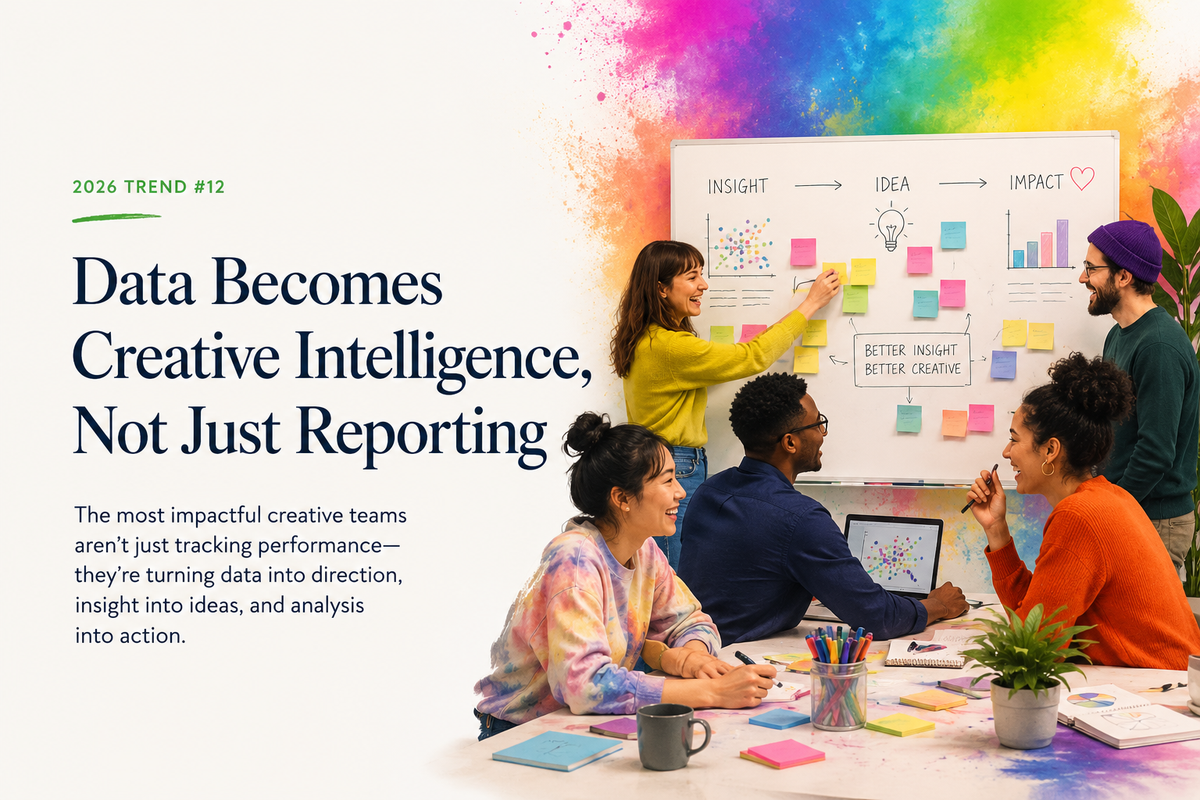
In 2026, data stops being a backward-looking scorecard and becomes a creative advantage. Creative Ops evolves from “report builders” to “insight engines,” turning workflow data, capacity signals, performance metrics and creative quality indicators into intelligence that shapes decisions upstream. The most advanced studios use data to prevent burnout, improve briefs, forecast demand, measure creative impact and guide strategic investments: all without burying teams in dashboards.
Data shifts from descriptive to predictive
- Dashboards show tomorrow’s risks, not just yesterday’s activity
- Capacity forecasts update in real time based on workload, PTO and priorities
- Predictive analytics flag projects likely to miss deadlines
- AI models forecast resource needs across quarters or product launches
Creative performance becomes measurable
- Creative quality scored through engagement, clarity, compliance and craft
- Benchmarking across channels (email, display, landing pages, social)
- A/B insights rolled into templates and guidelines
- Heatmaps and behavioral data linked back to creative decisions
Ops uses data to optimize the entire pipeline
- Identify which teams are over capacity: or underutilized
- Spot recurring blockers: reviewers, channels, or business units
- Track revision cycles, handoff times and bottlenecks
- Recommend workflow updates based on evidence, not opinion
Data becomes part of the brief, not an afterthought
- Creative teams receive campaign performance insights before concepting
- Briefs contain historical learnings and predicted audience responses
- Stakeholders contribute KPIs and success metrics upfront
- Business goals tied to creative requirements with measurable outcomes
Talent health becomes a data signal
- Capacity indicators show early burnout risk
- Creative pace or quality changes flagged automatically
- Pulse-check insights tied to workload and velocity
- Ops uses data to rebalance talent, not guess
Why It Matters
Creative teams make better work when they have better information. When data becomes intelligence: not just reporting: teams can predict issues, make smarter decisions, design with purpose and avoid wasteful cycles. Ops becomes a strategic advisor instead of a traffic controller. Creative teams get clarity. Stakeholders get visibility. Leaders get the truth. And the studio runs with more precision, less friction and far fewer surprises.
How to Evolve
- Build dashboards that forecast risk, capacity, timing and workload
- Integrate performance data into briefs and kickoffs
- Standardize KPIs across product, marketing, brand and creative
- Use AI to analyze revision patterns, bottlenecks and quality indicators
- Pair data with narrative insights: not just charts: for leadership
- Add data literacy to Ops training, including interpretation and storytelling
- Build quarterly “creative intelligence reviews” to assess trends and make system improvements
- Use data to design templates, staffing plans, workflows and prioritization systems
Originally published at https://www.linkedin.com.