Trend #6: “Micro-studios” Inside Large Companies
In 2026, large enterprises move away from one giant, centralized creative team and shift toward micro-studios: small, specialized pods built around product lines, programs or priorities. Creative Ops oversees the ecosystem, orchestrating resources across pods so the whole system works as one.
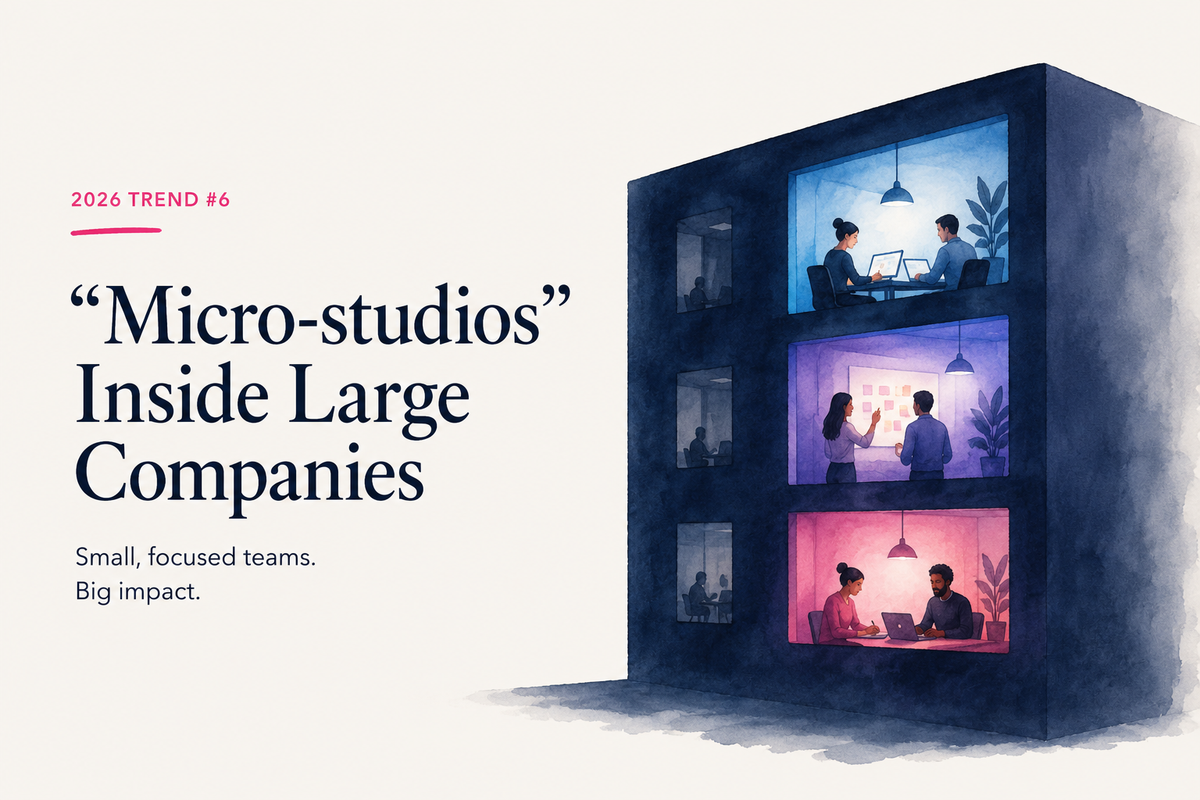
In 2026, large enterprises move away from one giant, centralized creative team and shift toward micro-studios: small, specialized pods built around product lines, programs or priorities. These pods operate like mini creative agencies inside the company, each with clearer ownership, tighter collaboration and faster delivery. Creative Ops oversees the ecosystem, orchestrating resources across pods so the whole system works as one.
Small specialist pods are lean teams with the right mix of skills for their domain:
- Designers, writers, PMs and strategists aligned to a specific product or program
- Smaller teams with tighter relationships and fewer handoffs
- Domain experts who understand their business partners deeply
- Embedded creative partners instead of disconnected service teams
Cross-functional teams built around product or program:
- Creative teams embedded with product, sales, brand or marketing
- Shared dashboards, KPIs and roadmaps
- Direct communication instead of routing through layers
- Collaborative planning that avoids disconnected ask pipelines
Creative Ops becomes the conductor of the entire ecosystem:
- Monitor workload across all pods
- Move specialists when capacity shifts
- Ensure consistency in tools, governance and standards
- Manage career growth across pods so talent doesn’t get siloed
- Standardize intake and prioritization across the network
Faster delivery and better ownership with smaller teams and clearer lines:
- Decisions happen faster
- Creative partners stay close to the work
- Feedback loops tighten
- Accountability strengthens
- Teams feel true ownership over their product or program area
Why It Matters
Micro-studios give creative teams clarity, connection and speed. Smaller pods collaborate more naturally, understand their business partners deeply and make decisions faster. Creative works upstream instead of reacting downstream, which produces more strategic and relevant output. Ops provides the structure that keeps pods aligned: preventing fragmentation, ensuring shared standards and allowing talent to flex across the org. The result: a studio model that scales without sacrificing quality, culture or creative momentum.
How to Evolve
- Reorganize creative teams around product lines, programs or customer segments
- Assign dedicated writers, designers and PMs who stay embedded in those areas
- Build shared dashboards for KPIs, bandwidth and priorities across pods
- Standardize tools, governance, templates and review steps across the system
- Create rotation paths so talent can move between pods without losing context
- Let Ops manage intake, prioritization and cross-pod resource allocation
- Start with one pilot pod, refine it, then roll out to the rest of the org
Originally published at https://www.linkedin.com.