Trend #7: Prediction Dashboards Replace Status Decks
In 2026, creative teams finally move past static status decks and shift to real-time prediction dashboards that show risks, capacity, workload and progress as they happen.
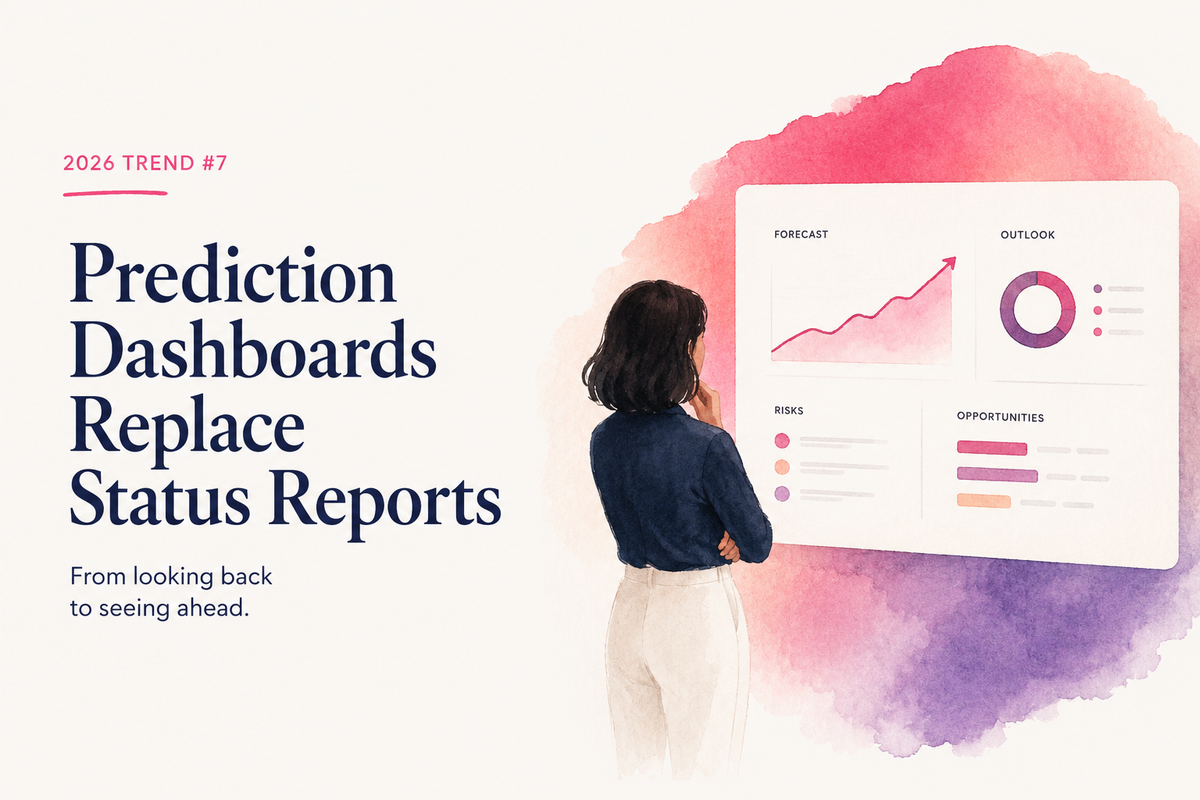
In 2026, creative teams finally move past static status decks and shift to real-time prediction dashboards that show risks, capacity, workload and progress as they happen. Instead of spending hours updating slides, teams make decisions from live data generated directly from their operating system. Weekly recaps get replaced by always-on visibility.
Real-time dashboards forecasting risks as they evolve beyond “where things are today” and start predicting what will go wrong tomorrow:
- Automated alerts for slipping timelines
- Visuals showing where approvals or dependencies are stalling
- Risk indicators based on workload, velocity or review patterns
- Forecasts tied to historical performance data
Capacity models updating automatically, shifting from gut instinct to real math:
- Role-based bandwidth updated in real time
- Automated visibility into who is overloaded or under-utilized
- Forecasted capacity weeks or months into the future
- Instant clarity on whether new requests can be supported
AI surfacing bottlenecks before PMs do becoming a silent partner monitoring the system:
- Spot repetitive delays (legal, brand, stakeholder X)
- Flag patterns in stalled revisions or long review cycles
- Identify common blockers across teams
- Predict where creative teams will get stuck next
Decisions made from live data, not weekly recaps and decisions shift into real-time spaces:
- Stakeholders see what’s happening without waiting for a meeting
- Priorities shift based on current workload and impact
- Leaders get visibility into progress, risks and blockers instantly
- Creative, marketing and product teams work from the same truth
Why It Matters
Status decks only show what already happened: and by the time issues surface, it’s often too late. Predictive dashboards flip the model. Teams see risks early, rebalance faster, protect creative time and avoid crisis-mode scrambles. Leaders get real visibility into workload, priorities and timelines without asking for an update. And creative teams get back the hours previously wasted building decks, letting them focus on the work that actually moves the business.
How to Evolve
- Replace weekly status decks with always-on project dashboards
- Integrate workflow, resourcing and analytics into a single reporting layer
- Use AI-driven risk scoring to flag delays and review bottlenecks
- Build capacity dashboards that auto-pull data from workloads and calendars
- Train stakeholders to self-serve instead of requesting updates
- Set standards for dashboard hygiene: naming, statuses, metadata, ownership
- Pilot predictive dashboards with one team, refine your model, then scale
Originally published at https://www.linkedin.com.