Trend #8: Legal + Marketing Workflows Finally Get Integrated
In 2026, legal review becomes integrated, not a bottleneck. Shared workflows, clear stages and AI checks align creative, marketing and legal in one system. Ops drives SLAs, claim libraries and visibility, reducing risk, speeding approvals and replacing chaos with predictable, transparent execution.
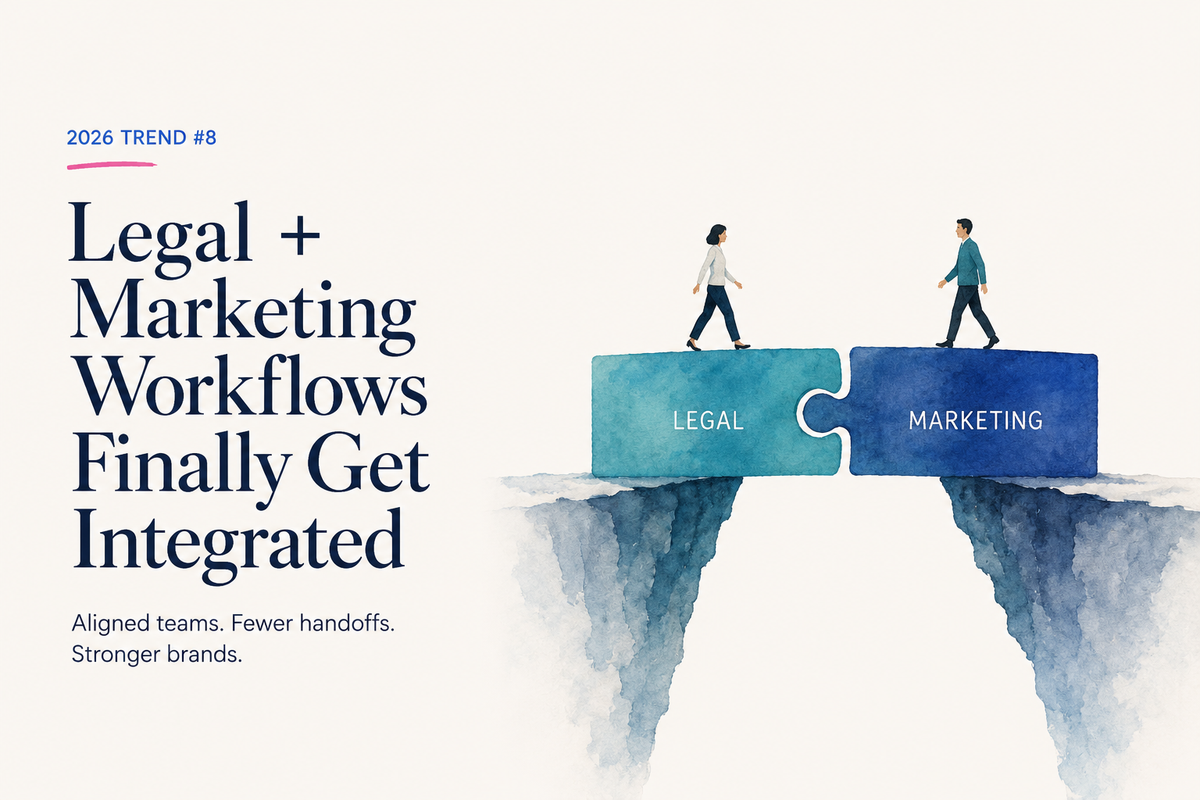
In 2026, legal reviews stop being a black box. Creative, marketing and legal finally work inside one connected workflow with shared tools, rules and review paths. Legal becomes a strategic partner instead of a late-stage bottleneck. Creative Ops sits at the center, architecting a system that reduces risk, speeds approvals and eliminates the chaos caused by scattered communication and unpredictable turnaround times.
Joint review processes replace siloed handoffs
- Brand, marketing and legal review content in the same platform, not in email threads
- Clear, sequential stages: Brief → Copy Draft → Brand Review → Legal Review → Final QA
- Reviewers see the same asset, same comments and same history
- Legal can comment alongside other reviewers so contradictions get resolved early
- Ops sets SLAs and ensures both teams understand expectations
Structured claim review workflows create predictability
- Every claim type classified into low, medium or high-risk categories
- Review paths automatically triggered based on the risk level
- Legal receives full context: audience, region, channel, product, substantiation
- Auto-populated forms collect required details to avoid “missing info” delays
- Urgent requests routed through expedited paths with pre-set turnaround windows
Pre-approved claims libraries reduce legal load by 40–60%
- Libraries split by region, product line, regulatory environment and tone
- Approved claims tied to acceptable variations (e.g., “may help,” “can support”)
- Writers and marketers pull from approved language before drafting
- Creative teams know exactly what they can and cannot say
- Ops updates libraries with Legal quarterly to reflect policy and regulatory changes
AI-enabled compliance checks add an early layer of protection
- AI scans copy for high-risk words, unsubstantiated claims or regulated categories
- Automates checks for mandatory disclaimers and region-specific requirements
- Image scanning catches risk in visuals (medical imagery, before/after ethics, etc.)
- AI flags potential conflicts between product claims and packaging
- Legal gets a “cleaner” draft, reducing review time and legal back-and-forth
Ops removes friction by managing the entire ecosystem
- Standardizes templates, review steps, requirements and documentation
- Tracks legal bottlenecks and surfaces patterns to improve the system
- Aligns brand, marketing and legal teams on timelines, expectations and versions
- Ensures legal doesn’t receive incomplete drafts or half-baked requests
- Creates audit trails that satisfy regulatory teams, procurement and compliance
Cross-functional visibility prevents surprises
- Shared dashboards show what’s in review, who is assigned and aging items
- Stakeholders see the whole pipeline instead of guessing where things stand
- Automatic alerts trigger when approvals are overdue
- Leadership gets clarity on where risk lives and where process breaks down
Why It Matters
Legal reviews are historically one of the slowest, most unpredictable parts of creative production: and one of the biggest sources of risk. Integrated workflows eliminate the chaos of scattered feedback, contradictory edits and last-minute surprises. Claim libraries reduce repetitive legal work and shorten timelines dramatically. AI reduces legal burden by catching issues early. And because Ops owns the ecosystem, the process becomes consistent, transparent and fair. The business gets faster approvals and fewer compliance issues. Creative teams get clarity. Legal gets cleaner inputs. Everyone wins.
How to Evolve
- Move legal, brand and marketing reviews into a single shared platform
- Build end-to-end workflows for different claim types with automated routing
- Develop pre-approved claims libraries and integrate them into copy templates
- Add AI compliance checks into intake, draft review and pre-QA stages
- Set SLAs for every review stage, track them and share dashboards
- Create standardized requirements for what must accompany a legal request
- Hold monthly Ops + Legal syncs to refine rules, address bottlenecks and update claims
- Train writers and marketers on how to use pre-approved claims and avoid red flags
- Launch a pilot workflow with one business unit, refine, then scale across the org
Originally published at https://www.linkedin.com.