What I Want to Bring to Work Every Day
Five leadership principles I want to bring to work every day, especially when the pressure is high: curiosity, ownership, courage, optimism and love for the work.

Leadership principles matter most when the work gets hard.
This week, I found myself thinking less about what I want to accomplish at work and more about how I want to accomplish it.
Goals matter. Results matter. But results alone do not tell us what it felt like to create them. The way a leader asks questions, responds to mistakes, handles disagreement and talks about the work becomes part of the work. Over time, those daily behaviors shape the culture far more than anything written in a values statement.
I wanted to be more deliberate about the principles I bring into those moments. Not an exhaustive leadership philosophy or a list of qualities I expect to demonstrate perfectly, but a short set of commitments I can return to when the calendar is crowded, the answer is unclear or the pressure is high.
Mine are curiosity before conclusions, ownership without blame, courage without arrogance, optimism that is contagious and love for the work.
What I like about these principles is the tension inside them. Curiosity still has to lead to a decision. Ownership cannot become fault-finding. Courage needs humility. Optimism must make room for reality. Love for the work cannot require people to give everything they have.
Principles are most useful when pressure makes them inconvenient.
Curiosity before conclusions
Conclusions are efficient. They let us sort a situation quickly: The brief was bad. The stakeholder is difficult. The team missed the mark. Someone should have known better.

Sometimes those conclusions are even correct. But when we start there, we usually stop looking. We miss the unclear decision, the hidden constraint, the conflicting feedback or the piece of context that never reached the people doing the work. We react to the most visible symptom and leave the underlying problem intact.


Curiosity does not mean endless investigation or refusing to make a judgment. It means creating enough space to ask a few better questions before deciding what happened and what to do next. What am I missing? What made this choice reasonable at the time? Where did the information break down? What would the people closest to the work tell me?
For leaders, curiosity is more than an interpersonal skill. It is a way to make better decisions. It keeps us from solving the wrong problem with great confidence.
Ownership without blame
When something goes wrong, accountability matters. Deadlines cannot simply disappear. Commitments have consequences. Teams need clear expectations, and leaders sometimes need to address performance directly.
Blame is different. Blame asks who should absorb the discomfort of failure. Ownership asks what each of us can do to improve the outcome now and reduce the chance of repeating the problem.
As a leader, I want my first response to be: What was mine to see, clarify, challenge or prevent? That does not mean taking responsibility for every action or protecting people from every consequence. It means recognizing that leaders shape the systems in which people work. If priorities change constantly, approvals are unclear or five people believe they have final say, the problem is not solved by identifying the person who finally dropped the ball.
Ownership creates movement. Blame creates defense. One makes it safer to surface problems while they are still small; the other teaches people to hide them until they can no longer be ignored.
Courage without arrogance
Leadership requires the courage to make a call with incomplete information, name a problem others would rather avoid, disagree with someone more powerful and protect the team when a request is unrealistic. It also requires the courage to let a strong idea come from someone else.
Arrogance can look like courage at first. Both may sound decisive. The difference is that courage leaves room for evidence, challenge and correction. Arrogance treats confidence as proof.
I want to speak plainly about what I see and explain the reasoning behind my recommendation. I also want to remain open to the possibility that I am wrong. A leader should be able to say, “This is the direction I believe we should take,” and, “Here is what could change my mind.”
That combination matters in creative work, where there is rarely one objectively correct answer. Teams need leaders who can provide direction without turning personal preference into unquestionable truth.
Optimism that is contagious
I do not mean forced cheerfulness or the kind of positivity that asks people to pretend a difficult situation is fine. That version of optimism erodes trust because everyone can see the gap between the message and reality.
The optimism I want to bring is a grounded belief that problems are solvable and people are capable. It names what is hard, then turns toward what is possible. It sounds like: This is not working yet. What have we learned? What can we change? What is the next useful move?
Leaders set emotional weather. When we broadcast panic, resignation or cynicism, the team has to spend energy managing our reaction in addition to solving the problem. Calm optimism gives that energy back. It helps people see a path when the current situation feels stuck.
Optimism becomes contagious when it is paired with action. It is not a prediction that everything will work out. It is confidence that we can do something useful with what happens next.
Love for the work
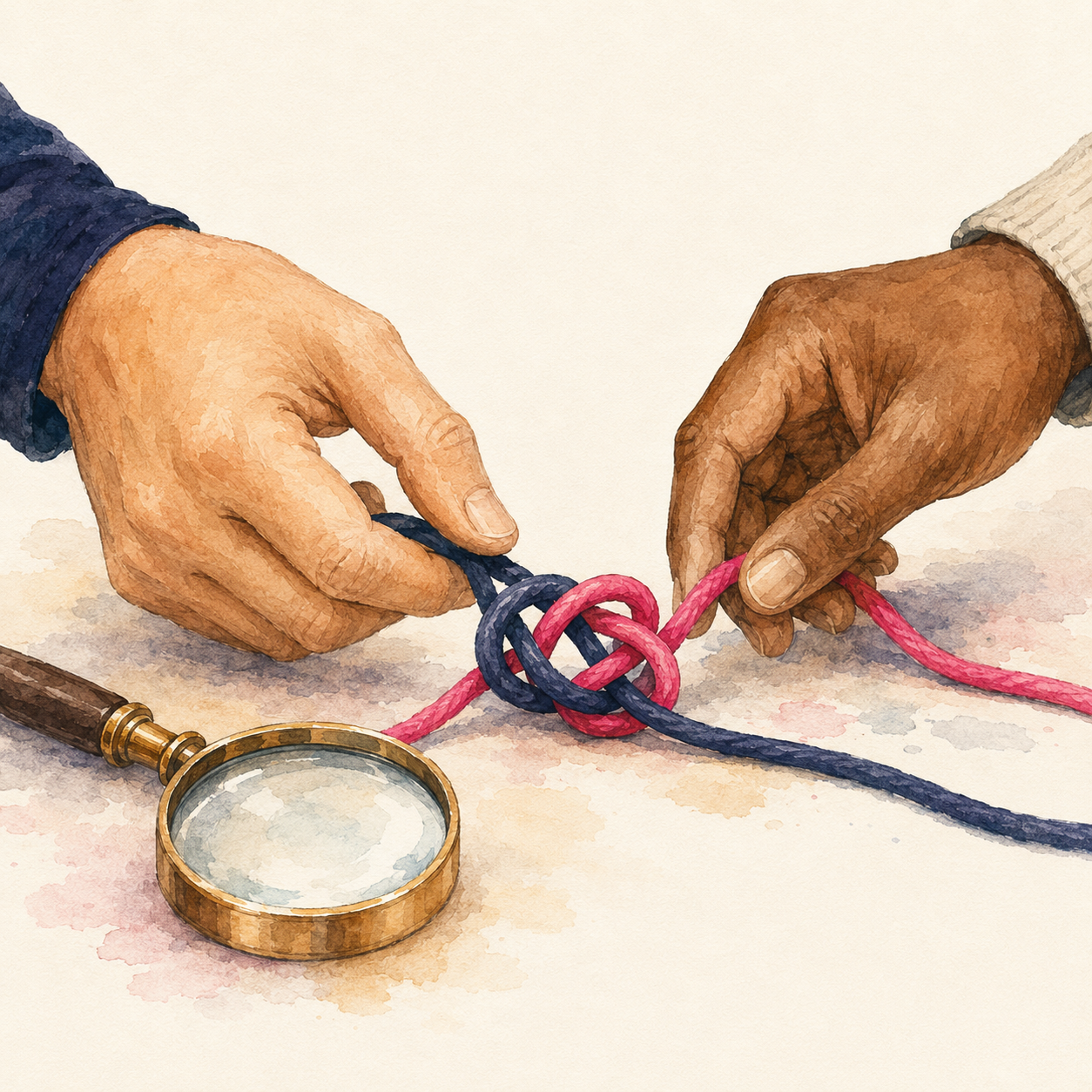
This may be the least conventional principle on the list, but it might be the one I care about most. Love for the work is not devotion to a job, a company or a culture that expects work to come before the rest of life. It is care for the thing being made and respect for the people making it. It is noticing the sentence that finally clicks, the design choice that makes an idea clear or the system change that gives a team room to do better work.
Creative Operations can become consumed by intake forms, timelines, staffing, governance and measurement. Those things matter because they shape the conditions around the work. But I do not want to become so fluent in constraints that I stop being moved by what the team is making.
Love for the work reminds me why the system is worth improving. It creates the energy to protect craft, celebrate progress and remove friction that others may have accepted as inevitable.
Turning principles into practice
A principle only matters if it changes a behavior. I want these ideas to become small, repeatable choices:
- Before reaching a conclusion, ask one question that could change it
- When something goes wrong, name my share of the problem before assigning someone else’s
- When a hard truth needs to be said, say it clearly and leave room to be corrected
- When the team feels stuck, acknowledge the difficulty and help identify the next useful move
- When the work is good, stop long enough to notice and say why
I will not do all of this perfectly. No leader does. The point is not perfection; it is having something clear enough to return to when I drift.
Leadership principles should not merely describe how we see ourselves. They should describe what other people can expect to experience when they work with us. That is the standard I want to keep in view: not what I intended to bring into the room, but what people actually felt once I was there.
What do you want the people you lead to experience from you every day? And which of your principles becomes hardest to practice when the pressure is on?