Your Creative Team Is Not Slow. Your Approval Structure Is Broken.
Creative teams are often blamed for being slow, but the real bottleneck is usually the approval structure around them. This post explores approval anxiety, endless feedback loops and why unclear decision-making quietly damages creative quality, team morale and delivery speed.
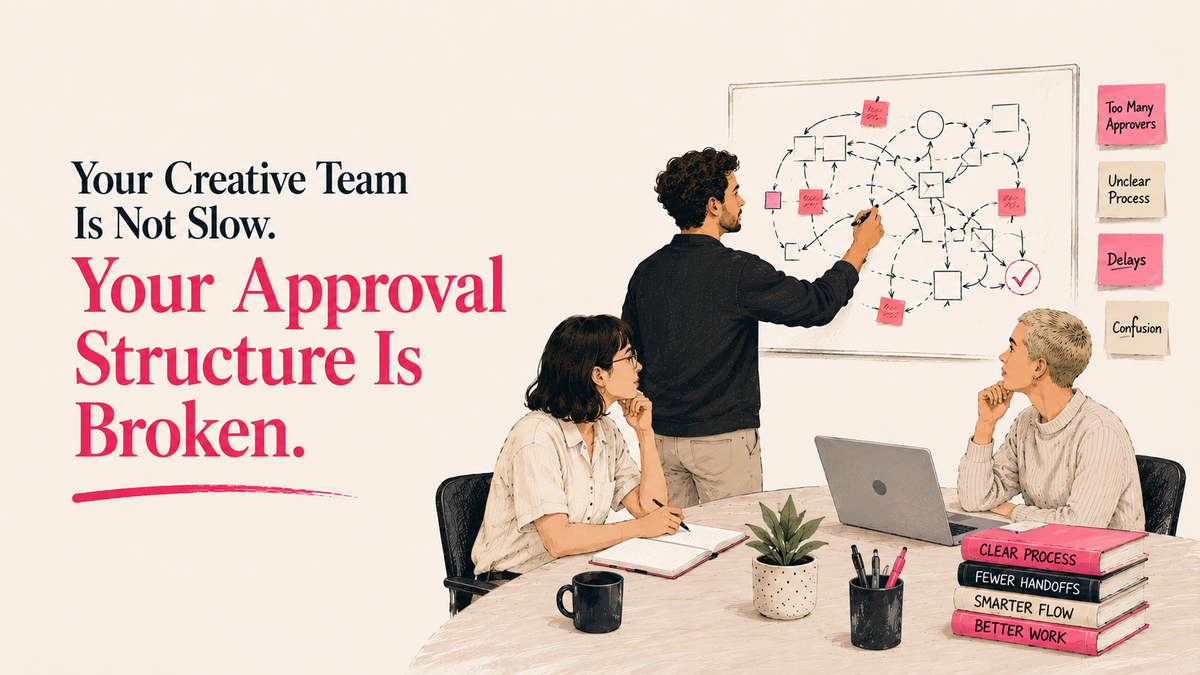
Creative teams get blamed for being slow frequently. But after years inside large organizations, I rarely see creative teams as the bottleneck. What I usually see is:
- Too many reviewers
- Conflicting feedback
- No clear decision-maker
- Legal involved too late
- Executives parachuting into projects at the last minute
- Endless revision cycles disguised as collaboration
And then everyone asks the same question: "Why does everything take so long?"
The answer is usually uncomfortable. Most delays are not production delays. They are decision delays.
At some point, many organizations quietly turn the approval process into a risk-management system. Nobody wants to be the person who says: "This is good enough. Ship it."
So the feedback loops continue. Tiny edits become organizational coping mechanisms.
One stakeholder tweaks the headline. Another softens the language. Someone else wants a safer visual. Legal raises concerns after the work is nearly complete. Leadership changes direction after seeing a draft.
Round after round, the work gets flatter. Safer. Cleaner. More forgettable. And you can actually feel it happening.
Eventually, the team stops asking: "Is this good?" And starts asking: "Will this survive approvals?" That shift changes everything.
A surprising amount of what organizations call "brand strategy" is actually fear with nicer vocabulary. Fear of making the wrong decision. Fear of taking creative risks. Fear of leadership disagreement. Fear of public criticism.
So instead of making strong decisions, organizations often default to consensus. The problem is that consensus is not the same thing as clarity. Not everyone needs equal vote weight.
That is not collaboration. That is traffic.
The healthiest creative organizations make one thing very clear: who decides. Not who comments. Not who joins the meeting. Not who wants visibility. Who decides.
Because strong creative operations is not about controlling the work. It is about reducing organizational friction so creative teams can actually do their best work.
A healthy approval structure:
- Defines ownership early
- Brings the right stakeholders in at the right time
- Limits unnecessary review layers
- Separates preference from strategy
- Resolves feedback instead of collecting it endlessly
Good operations protects creative quality. Bad operations slowly suffocates it.
And in many organizations, creative quality dies from too much consensus, not too little talent.