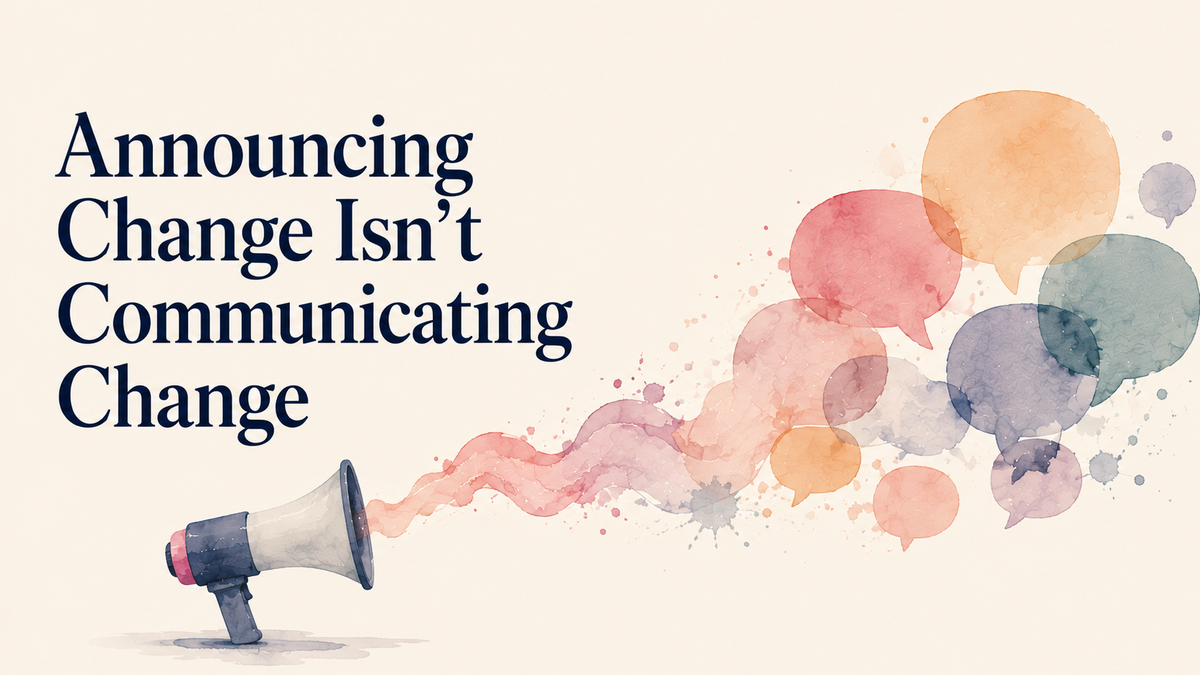
Announcing Change Isn't Communicating Change
Announcing organizational change isn’t enough. Learn how clear, multichannel communication and feedback loops can turn transformation plans into lasting adoption.
I had a realization this week while meeting with one of our senior marketing leaders. We've been working on a significant transformation for months. We've spent countless hours thinking through how the work should flow, where decisions should happen, how teams should work together and what needs to change to make the organization more effective.
We've been living and breathing it. The rest of the organization hasn't.
It seems obvious when you say it that way, but it was an important reminder for me. The people closest to a transformation have had months to understand the problems, debate the options and gradually get comfortable with where everything is headed. Somewhere along the way, we can start assuming everyone else has been on that journey with us.
They haven't.
And if we want the change we've spent so much time designing to have any real chance of succeeding, communicating the change has to be as intentional as designing it. Because announcing change and communicating change are two very different things.
You have a head start
One of the hardest things about leading change is remembering how much more you know than everyone else.
By the time you start introducing a transformation more broadly, you've already had time to understand why the current way isn't working. You've considered alternatives. You've heard the arguments. You've seen drafts. You've learned the new terminology. You've probably talked about the change so much that you're sick of talking about it.
Your audience hasn't. They're on Day 1. That creates a change communication gap: The people designing the change are emotionally and intellectually several steps ahead of the people experiencing it. Good change communication has to close that gap. And one presentation isn't going to do it.

Start with why anything needs to change
Leaders are often eager to explain the solution. Here's the new structure. Here's the new workflow. Here's the new tool. Here are the new roles. But the people affected by the change are usually still trying to understand the problem.
If they don't understand why the old way needs to change, everything that follows can feel arbitrary. This doesn't mean manufacturing a burning platform or exaggerating what's broken. Sometimes the current way works reasonably well but won't support where the organization is going next.
Say that.
Explain what you're seeing. What has become difficult? What are you trying to make possible? What have you learned? What isn't sustainable anymore? People don't have to agree with every decision. But they need enough context to understand how you got there.
Translate the organization into "me"
Once people understand the why, they're going to ask a much more personal question:
What does this mean for me?
It's not selfish. It's how humans make sense of change. They ask: Will my role change? Who do I go to now? Is this going to make my job easier or harder? What am I supposed to do differently Monday morning? Is something I used to own moving somewhere else? Will I need to learn something new?
A beautifully designed operating model isn't particularly useful if people can't locate themselves inside it.
Don't only show people the future state. Walk them through what changes in their actual work.
Today, you do this. Going forward, you'll do this.
That's often the moment an abstract organizational change becomes understandable.
Repeat yourself more than feels reasonable
This may be the least glamorous part of change communication: You have to say the same thing over and over again.
People miss meetings. They skim emails. They hear something before they have enough context to understand why it matters. A detail that seemed irrelevant two weeks ago suddenly becomes important when they encounter it in their work.
Repetition isn't evidence that your communication failed. It's part of communication.
Use different formats. Talk about the change in team meetings. Document it somewhere people can find later. Create examples. Answer questions. Let managers translate it for their teams. Show what it looks like in practice.
And expect the questions to evolve. The questions people ask immediately after an announcement are rarely the same questions they'll ask after they've tried working in the new way.
Make questions safe
Questions are incredibly useful during change because they show you where your communication isn't working. But only if people feel comfortable asking them.
When someone says, "I don't understand why we're doing this," it's tempting to hear resistance. Sometimes it is resistance. Sometimes it's simply information.
Something that feels perfectly logical to the people who designed the change hasn't connected yet.
Curiosity before conclusions matters here. Instead of immediately defending the decision, ask what isn't making sense.
You may discover a communication problem. You may discover a flaw in the design. You may discover that someone simply needs more time.
All three are useful things to know.
Before you launch, change seats
My conversation this week also made me realize there's a useful exercise for anyone leading transformation: Try looking at the change from the perspective of someone who hasn't been in any of the meetings.
Forget everything you know about how you got here. If this were the first time you were hearing about the change, what would you need to understand?
Why are we doing this? What's actually changing? What's staying the same? What does it mean for my team? What do I need to do differently? When does this happen? Where do I go when I have a question?
Those questions are very different from the ones we've been answering while designing the transformation. And that's the point.
The people building the change need to understand how the system works. The people experiencing the change need to understand how they work within the system.
Build communication into the change
That realization is changing how we're approaching the next phase of our own transformation.
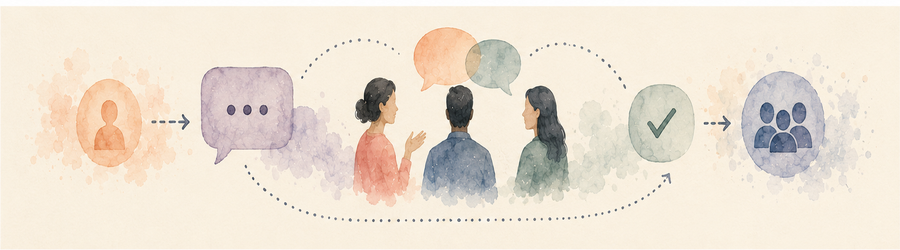
We're starting with a small Asana pilot rather than rolling out a finished system to everyone at once. That gives people a chance to work in the new model while we're still learning. More importantly, we're building feedback directly into the process so we can understand what's clear, what's confusing and what needs to change before we scale.
We're also developing a multichannel communication plan. Email updates will help people understand what's happening and why. Lunch and learns will create space for conversation and questions. Training sessions will help people understand what they actually need to do differently. And we'll continue finding ways to reinforce the change as people begin working within it.
The important word there is multichannel. People absorb change differently and at different moments. Someone may skim an announcement and not think much about it until the change affects their work three weeks later. That's when the training, documentation or conversation with a colleague suddenly matters.
It also creates something I think change communication desperately needs: a feedback loop. Communication shouldn't only travel from the people designing the change to the people experiencing it. What we're hearing during the pilot should influence what we communicate next and, when necessary, influence the transformation itself.
That's a very different mindset from creating a communications plan for launch. We're not just asking, "How do we tell everyone what's changing?" We're asking, "How do we bring people through the change with us?"
Show people that the change is real
Communication gets much harder when the organization says one thing and continues rewarding another.
You can announce a new prioritization model, but if leaders still allow people to jump the line, the old system is still in charge.
You can introduce a new intake process, but if half the organization continues sending requests through Slack, email and hallway conversations, you've really introduced an optional intake process.
You can tell teams you want them doing more strategic work, but if every urgent production request still gets accepted, you've communicated something very different.
People pay attention to what organizations do. The systems, decisions and behaviors surrounding a change are part of the communication. Maybe the most important part.
Communication is part of the transformation
I don't think organizational change has a communication phase. Communication is part of the change.
That may be the biggest realization I've had from this particular transformation. We can design an elegant operating model, document every workflow and solve every governance question we can anticipate. None of it matters very much if the people who need to work differently don't understand what we're trying to accomplish or how they fit into it.
The goal isn't to get everyone excited about every change. That's an unrealistic standard. And it isn't to communicate something once and check the box.
The goal is clarity.
People should understand why the change is happening, what it means for them, what they're expected to do differently and where they can go when something doesn't make sense.
Because the success of a transformation isn't determined by how good the plan looks on launch day.
It's determined by what people do differently the day after.
Categories: Transformation, Leadership, Creative Ops