AI & Tools
AI Shortcuts for Creative Ops That Saves Time & Gets Results
Most Creative Ops teams aren’t short on ideas, they’re short on time. Here are practical ways to use AI to reduce friction, speed up work and improve outcomes.
AI & Tools
Most Creative Ops teams aren’t short on ideas, they’re short on time. Here are practical ways to use AI to reduce friction, speed up work and improve outcomes.
Creative Ops
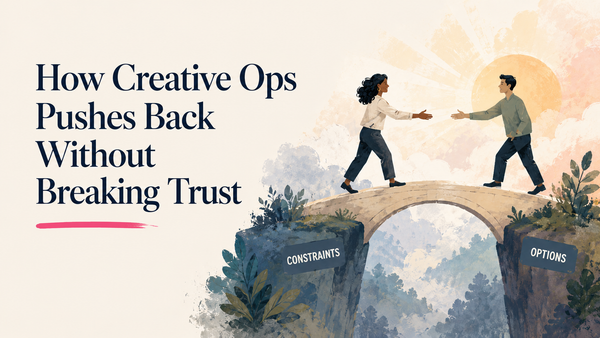
Creative Ops pushback isn’t about saying no. It’s about making constraints visible and tradeoffs clear. When grounded in facts and applied consistently, it builds trust, protects teams from unrealistic demands and reinforces credible delivery.
Creative Ops
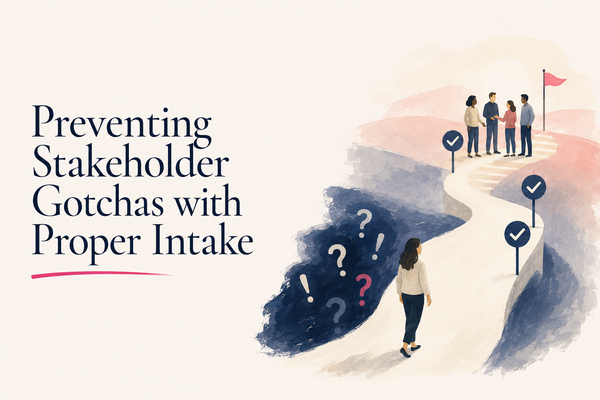
Creative Ops isn’t just collecting requirements at this stage. We’re figuring out who actually has influence and how that influence will show up when it counts. When that work gets skipped, it doesn’t disappear. It usually reappears at final review, louder and with very strong opinions.
Creative Ops
These aren’t annoyances. They’re patterns that slow teams down, lower quality and burn people out. If we want creative teams to do better work, we have to stop accepting the conditions that make good work harder than it should be.
Transformation
Re-orgs create pressure to prove value quickly. That’s usually when teams start looking at their workflows and asking, do we tweak this or do we rebuild it entirely? The honest answer is, sometimes you do need an overhaul.
Transformation
Re-orgs test your instincts, your patience and your ability to lead without all the answers. New leadership shows up, teams shift, you lose people you trust or you find yourself in a completely different org overnight. Even if you’re fine on paper, people around you might not be.
Transformation5
After a re-org, there’s always pressure to “fix the workflow.” Sometimes that’s necessary. But more often, teams jump straight to solutions without really understanding what’s broken.
Transformation
One thing I’m seeing right now is a lot of focus on where things moved. Who reports where. What team sits under what org. What changed on paper. But the reality is, most of us are still working with the same people, often in very similar ways, at least to start.
Creative Ops
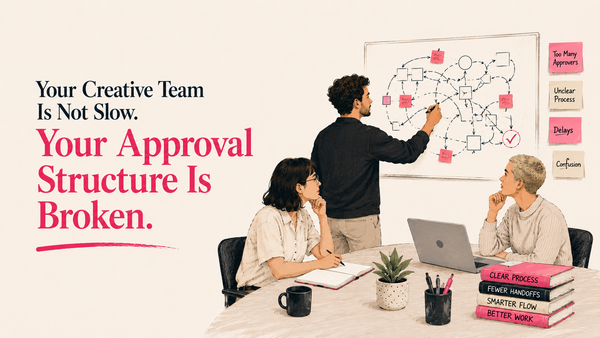
Most workflows aren’t broken end to end. They’re usually breaking in a few predictable places. The real work isn’t identifying what those places are. It’s knowing how to audit them and what to do when you find the issue.
Creative Ops
Great intake starts before the form. Strategy, insight and evidence are what protect creative work from late chaos. The most important part of intake is not the form. It is the strategic thinking that happens before a request is submitted. When work comes into Creative Ops, the real job is
Creative Ops
Prioritization works best when it is collaborative. Demand will always exist. The difference is whether we make it visible, measurable and actionable. And intake is where that visibility is created through shared accountability between the Requesting Team and Creative Ops.
Teams
Creative teams finally recognize that culture isn’t something you “get around to.” It’s designed. The most effective studios build intentional rituals that strengthen collaboration, protect creative energy and keep teams connected, especially in hybrid or remote environments.